Organization for the Prohibition of Chemical Weapons: "The number of sites containing chemical weapons far exceeds what Assad had declared during his rule."
April 6, 20251435 ViewsRead Time: 3 Minutes
Font Size
16
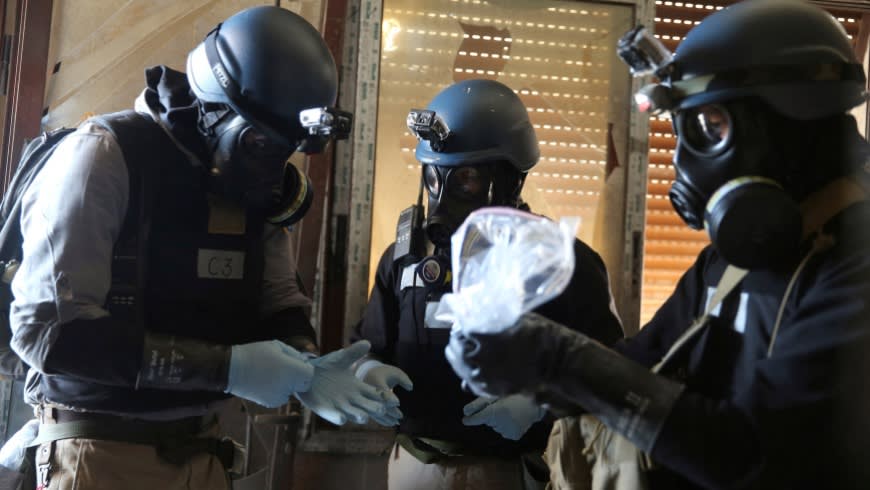
The Organization for the Prohibition of Chemical Weapons (OPCW) has revealed the existence of over 100 suspected sites containing chemical weapons still in Syria after the fall of the Assad regime, some hidden in caves or hard-to-reach locations, far exceeding what the ousted regime officially declared during its rule. The New York Times reported today, Sunday, April 6, citing the organization, that "the sites are believed to have been used in the manufacturing or storage of chemical weapons during Assad's rule, who resorted to using gases like sarin and chlorine against civilians and opposition fighters since the start of the Syrian revolution in 2011." In the early years of the Syrian revolution, the regime acknowledged only 27 sites, provided their data to the OPCW, which then sent UN inspectors to visit and close them, but Assad, according to international reports, continued to use chemical weapons at least until 2018. The New York Times confirmed that "the current Syrian government has allowed a team from the OPCW to enter the country this year to begin the process of documenting and inspecting the suspected sites." The organization explained that "its new estimate of over 100 sites is based on research conducted by independent experts, non-governmental organizations, and intelligence information provided by member states of the organization." The newspaper quoted researchers, experts, and former employees of the organization as saying that "some sites may be hidden in caves or locations difficult to detect by satellites, which increases the challenges facing verification and dismantling efforts." The newspaper emphasized that "finding and securing chemical sites in Syria is not only a matter of security considerations, but holds great importance in collecting the necessary evidence for international investigations into Assad's chemical program and potential legal prosecutions against violators." The newspaper quoted Raed al-Saleh, Minister of Emergencies and Disasters in the new Syrian government, as saying, "There are many sites that we know nothing about because the previous regime lied to the OPCW." Nidal Sheikhani, head of the Center for Documenting Chemical Violations in Syria, who worked for years with the OPCW, according to the newspaper, stated that "his center has identified dozens of new sites believed to be chemical weapon stockpiles or former research facilities, based on interviews conducted with Syrian scientists currently residing in Europe." The newspaper spoke with a former Syrian government chemist, who requested anonymity, and explained that "the Syrian chemical weapons program began in the 1970s, with the help of hundreds of government scientists, many of whom received training in Germany and other European countries, noting that some of them fled during the war years, while others remained in the country." Despite the new Syrian government's affirmation of its cooperation with the OPCW and its recent permission for an international inspection team to enter the country, the report sees securing these sites as a real test of the government's seriousness, especially amid concerns of armed groups infiltrating poorly guarded facilities.