After the dismantling of the Al-Hol camp.. Where have the foreign ISIS families disappeared?
February 24, 2026109 ViewsRead Time: 2 minutes
Font Size:
16
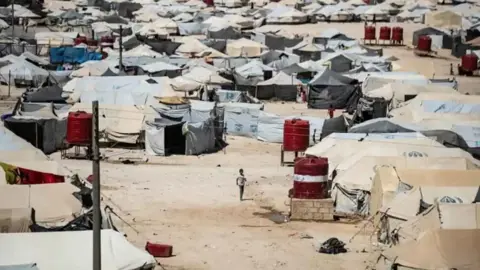
The closure of the Al-Hol camp in northeastern Syria has raised widespread questions about the fate of thousands of foreign women and children who were residing there, following the Syrian government's takeover of the site and the withdrawal of the Syrian Democratic Forces.
Numbers without clear answers
The camp housed about 24,000 people, including nearly 6,300 foreign women and children from 42 nationalities. However, field reports indicated that the section designated for foreigners has become almost empty, with no accurate official data released to determine their destination.
According to what the Wall Street Journal reported from U.S. officials, intelligence estimates suggest that between 15,000 and 20,000 people have fled, including members of ISIS, complicating the security situation further.
Baghdad takes action… and 5,600 families have returned
In contrast, Baghdad announced the transfer of more than 5,600 Iraqi families since 2021, as part of a security vetting and rehabilitation program, where they were housed in the Al-Jadaa camp in Nineveh province, under the supervision of specialized governmental and security agencies.
Researchers believe that Iraq has gained institutional experience in managing this file, while Damascus bears the brunt after taking over the camp, especially in light of intertwined security and administrative challenges.
The foreign file… the most difficult knot
The issue of foreign families remains the most complicated, as the majority of countries refuse to repatriate their nationals for legal and security reasons. With the dismantling of the camp, these individuals are no longer within a centralized detention scope that is easy to monitor, raising fears of a security vacuum or the reformation of extremist networks.
In light of this ambiguity, calls are increasing for Iraqi-Syrian coordination under international supervision, ensuring the exchange of information and the unification of vetting and follow-up standards, to avoid any gaps that could be exploited in the future.


