The War to Reshape the Middle East: Why is the Current Confrontation the Most Dangerous in the Region's History?
February 28, 20263775 ViewsRead Time: 3 Minutes
Font Size
16
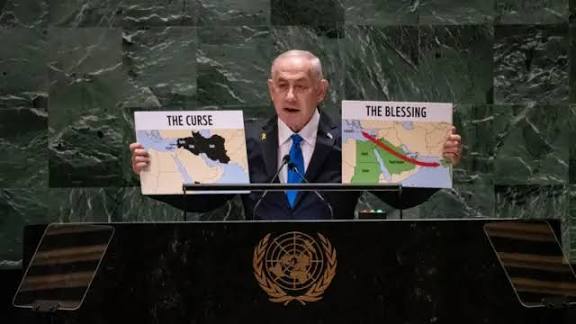
The ongoing confrontation in the Middle East is no longer just another round of the usual military escalations that the region has experienced over the past decades. The political and strategic indicators suggest that what is happening today goes beyond the framework of mutual strikes or traditional deterrence operations, entering a broader context related to reshaping the regional balance of power and possibly reforming the political system in Iran itself.
There is a fundamental difference between this war and previous conflicts, which lies in the nature of the strategic objective. Historically, the aim of skirmishes has been to weaken the opponent, contain its influence, or at best, send deterrent messages. However, today it seems that the stakes are much higher: undermining the structure of the Iranian regime and pushing it towards a political transformation that could ultimately lead to a system more aligned with the security and economic arrangements that international powers seek to establish in the region.
For this reason, Tehran views the current confrontation as a war for existence rather than just a transient military crisis. When any political system feels that its very survival is at stake, it tends to adopt long-term strategies based on attrition and prolonging the conflict rather than seeking a quick resolution. As is well known, Iran possesses multiple tools that allow it to manage an extended war, whether through its geographical depth, unconventional military capabilities, or its regional networks of influence.
The real turning point in this conflict lies not only in its military arena but also in its global economic repercussions. Prolonging the war practically means exposing one of the most crucial joints of the international economy to instability. The conflict zone is located at the heart of the global trade network, controlling vital maritime corridors through which a significant percentage of energy supplies and international goods flow.
Any ongoing disruption in these corridors or in the security of maritime straits will have a direct impact on energy prices and the stability of global financial markets, as well as the potential disruption of supply chains that the international economy relies on. Hence, the major paradox emerges: the longer the war lasts, the higher its costs will be, not only for its direct parties but for the entire global economic system.
Thus, international powers face a highly complex equation. On one hand, there is a clear desire to recalibrate the strategic balances in the Middle East, and on the other hand, there is a real fear that the escalation of conflict could lead to a global economic crisis whose effects may exceed the region's borders.
In light of the chaotic scene, the most realistic scenario seems to be not a quick military resolution, but a long, multi-layered conflict, where military confrontations intertwine with economic and diplomatic pressures. The final outcome of this war, whatever its course, may mark the beginning of a new phase in the history of the Middle East, a phase in which the balance of power and the entire regional system are redefined.