Venezuela Faces a Tough Test After Maduro: Questions of Power, the Military, and the Streets!
January 3, 20263393 ViewsRead Time: 2 Minutes
Font Size
16
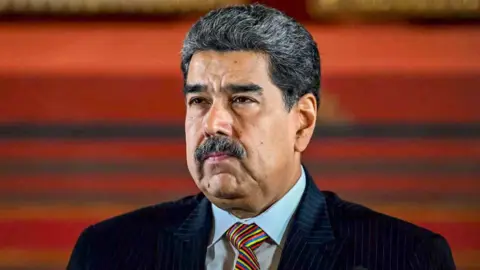
What happened in Caracas was not an ordinary event nor a natural end to a long political path; the speed at which power collapsed and the absence of any scene of resistance suggest that the country has entered a decisive moment without sufficient preparation. Without prior warning, Venezuela found itself facing a new political reality, devoid of a clear head, and burdened with more questions than answers.
A transition that seems more organized than announced
The prevailing talk in Western circles about a transitional civilian authority does not seem to be a spontaneous idea; the concept is based on a calculated change that preserves the structure of the state and avoids confrontation with power centers, especially the military institution. This proposal does not hide an external desire to manage the scene quietly, rather than to explode it.
Opposition ready... or in a hurry?
The opposition's rhetoric suggests high confidence and prior readiness. The talk of short-term plans for governance and about a figure who considers themselves a definitive choice reflects an attempt to fill the vacuum quickly, but this speed could be a double-edged sword if not accompanied by broader consensus within society.
The military between guarantees and risks
The role of the military institution cannot be overlooked in any upcoming scenario; it is not just a security tool but a party intertwined with politics and economics. Its acceptance of the new phase requires real assurances, and its rejection could open doors that cannot be easily closed. The most dangerous thing the country may face is a division within the military rather than a unified stance.
A divided street and a burdened memory
The Venezuelans themselves do not share a common opinion; some see what happened as salvation, while others view it as a break in the will of the state. This division makes popular legitimacy a more complicated issue than mere international recognition or political declaration, placing any upcoming authority before a trust test before a governance test.
The harder path is not the overthrow of power but what comes after
Experiences show that overthrowing a regime does not necessarily mean building a stable alternative. Venezuela today faces two clear options: a conditional transition governed by delicate balances, or a vacuum that may reproduce crises in harsher forms. In either case, the price will not be simple, and the real question is who will pay it this time?