Religion as a Tool for Mobilization: How Ideological Discourse Infiltrates the Iran War in the Age of Artificial Intelligence?
March 10, 2026946 ViewsRead Time: 2 Minutes
Font Size
16
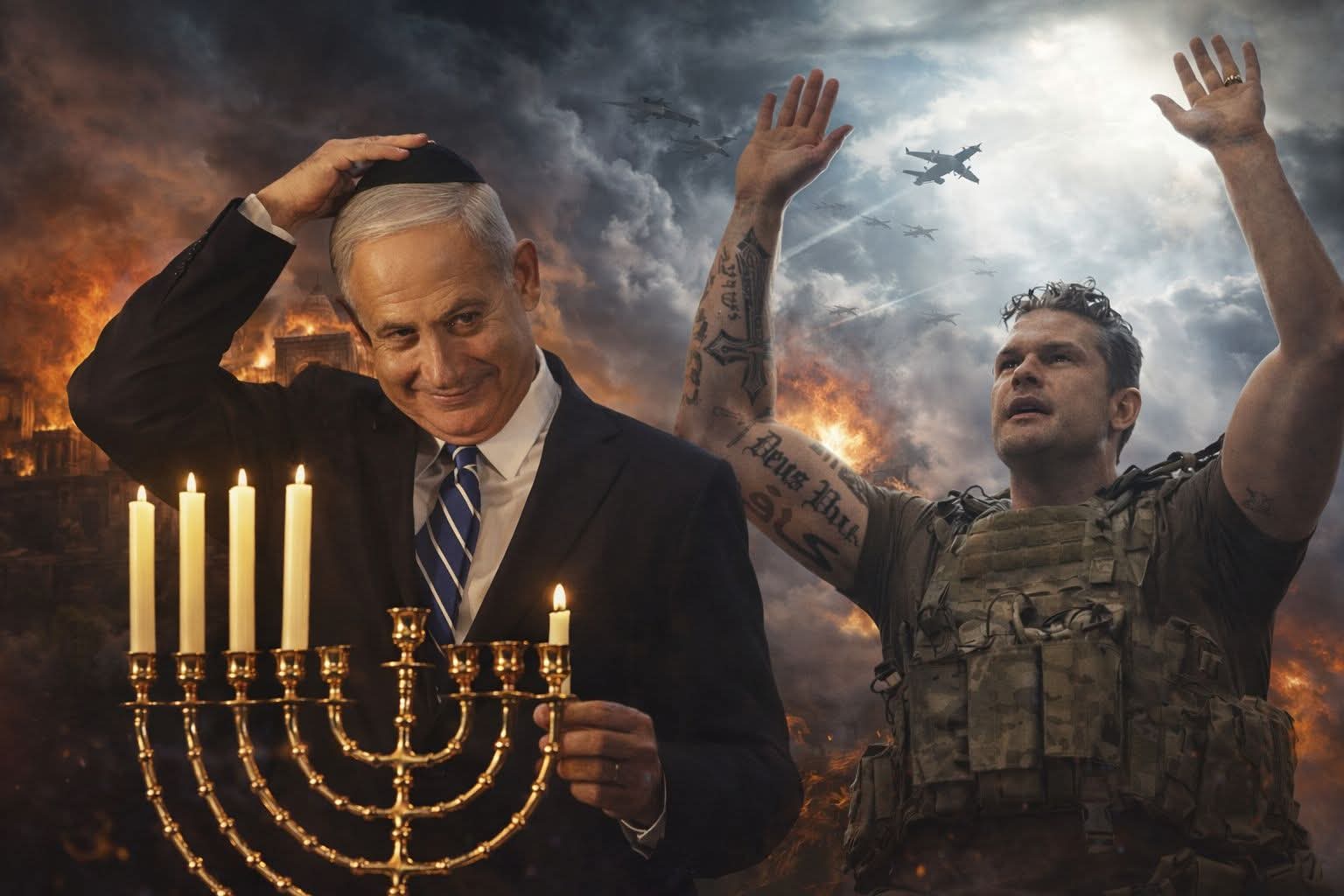
Despite the rapid technological transformations and the dominance of artificial intelligence tools in modern warfare, religious discourse remains strongly present in interpreting conflicts and mobilizing public opinion.
As tensions related to the war with Iran escalate, religious signals have emerged in political and military speeches from various parties, raising the question of the role of ideology in shaping narratives related to wars.
Religion as a Mobilization Tool in Iran and Israel
In Iran, the religious dimension is clearly evident in some statements and communications related to the conflict, where doctrinal concepts related to the emergence of Imam Mahdi are sometimes invoked, within a discourse that links current events to a broader religious and historical context.
Conversely, the discourse within Israel is not devoid of similar references, as some political and religious currents link the conflict to historical and ideological narratives related to the idea of the "Promised Land," adding a symbolic and religious dimension to the military confrontation.
Religious Signals in American Discourse
The religious discourse is not limited to the direct parties of the conflict. In the United States, observers have noted the emergence of religiously charged expressions in statements from some officials.
A military leader was quoted as telling soldiers that the war represents "part of God's divine plan," referring to a religious interpretation of current events.
Additionally, U.S. Ambassador to Israel Mike Huckabee stated that President Donald Trump was "placed here for this moment," a remark that sparked discussions about the use of religious symbolism in political discourse.
Between Politics and Doctrine
However, analysts indicate that the presence of religious language in political discourse does not necessarily mean that religion is the primary driver of the war. Such terms are often used as rhetorical tools to interpret events or enhance internal cohesion and rally public support.
Religious Discourse in the Age of Artificial Intelligence
The paradox is that these religious narratives resurface at a time when wars have become more connected to advanced technology, from artificial intelligence to cyber warfare and drones.
This confirms that modern conflicts, regardless of their technological advancement, still rely in part on symbolic and religious narratives to interpret and market them to the public.