Washington Accuses Beijing of Launching a 'Campaign of Intimidation' Against Taiwan's President, and China Warns Against Interference in Its Affairs
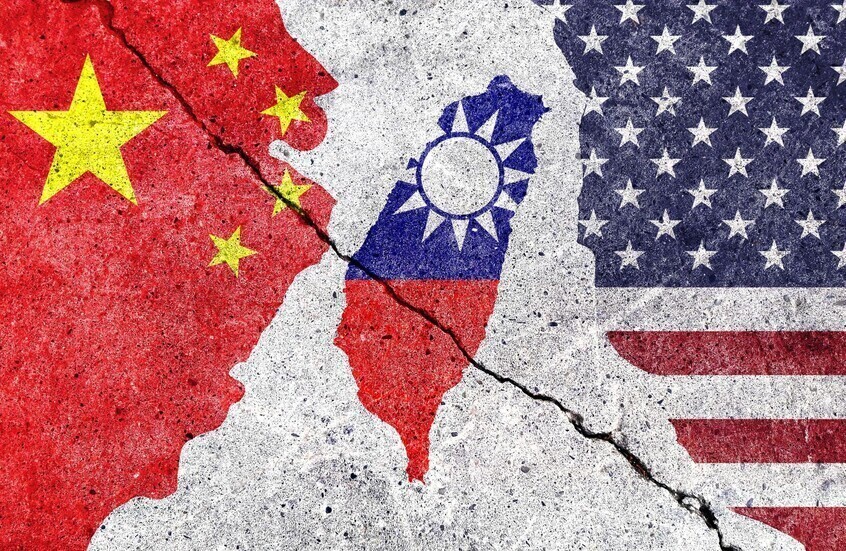
U.S.-China relations escalated again on Thursday, after the U.S. State Department sharply accused Beijing of using diplomatic 'intimidation' tools to obstruct the international movements of Taiwanese President, 'Lai Ching-te'.
This tension comes in the wake of the Taiwanese president's cancellation of an official trip planned to the African continent, following Chinese pressure on intermediary countries to withdraw transit permits for his flights, which Washington deemed a political exploitation of the international civil aviation system to 'suffocate' Taipei's diplomatic presence.
Washington: Beijing's Pressures are an 'Abuse' of the International System
In an official statement, the U.S. State Department described China's recent actions as a 'campaign of intimidation' aimed at isolating Taiwan internationally. Reports indicated that three African countries (Seychelles, Mauritius, and Madagascar) unexpectedly canceled the flight permits for the Taiwanese president's aircraft at Beijing's behest, forcing him to postpone his visit to 'Eswatini', Taiwan's only diplomatic ally in Africa. The U.S. side confirmed that these practices not only threaten the safety of air navigation but also represent an 'abuse' of international rules to serve political agendas, urging Beijing to cease its military and economic pressures and resort to dialogue.
China's Response: Taiwan is an Internal Matter and the 'One China' Principle is a Red Line
In contrast, Beijing's response was firm and direct, reiterating that the 'Taiwan issue' is purely an internal matter that does not accept external interference. The spokesperson for the Chinese Foreign Ministry emphasized the necessity for Washington to respect the 'One China' principle, considering any support for 'separatist forces' in Taiwan as a violation of international commitments. Beijing clarified that its actions aim to protect its sovereignty and territorial integrity, accusing Washington of 'distorting facts' and inciting discord in the sensitive Taiwan Strait region, warning that ongoing U.S. interventions would undermine regional stability.
A New Chinese Strategy to Internationally Isolate Taiwan
Political observers believe that the 'airspace ban' incident represents the beginning of a new and stricter Chinese strategy aimed at reducing Taipei's diplomatic margin. Instead of merely relying on military maneuvers around the island, Beijing has begun to use its economic influence to pressure countries friendly to Taiwan or those providing transit corridors for its officials. With the escalation of rhetoric between the two superpowers on Thursday, the international community fears that the Taiwan issue could shift from a mere political dispute to a comprehensive confrontation affecting global supply chains and security in the Indian and Pacific Oceans, especially as each side clings to its fundamental positions.