Third Geneva Round: Trump Rejects Any Enrichment of Iranian Uranium
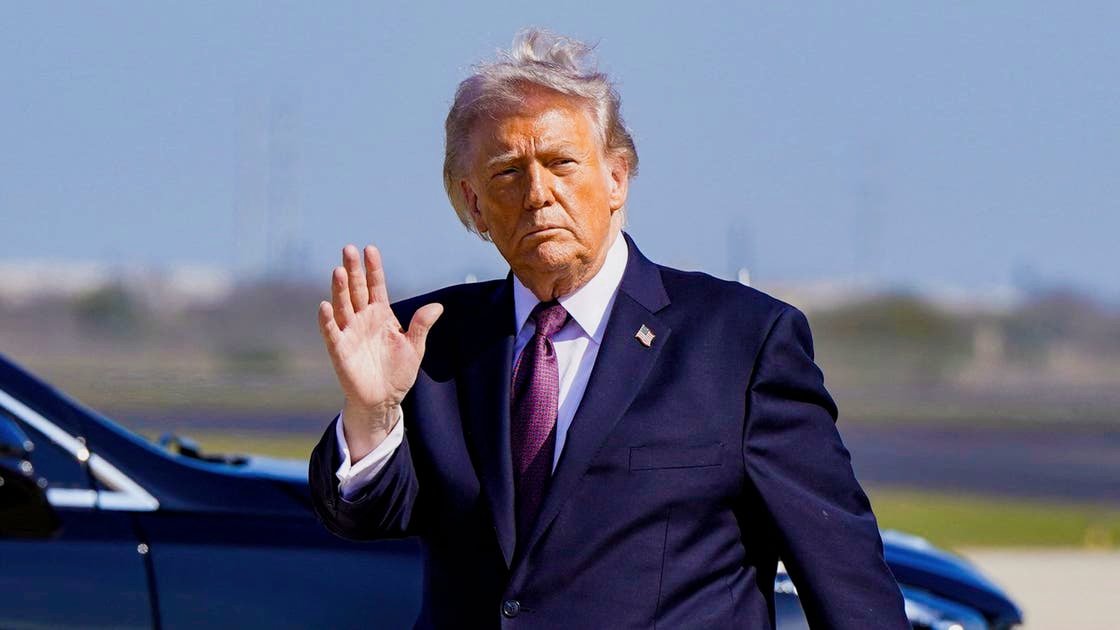
In a decisive stance, U.S. President Donald Trump emphasized yesterday, Friday, that he does not want Iran to carry out any enrichment of uranium, even at 20%, asserting that this includes all purposes, even civilian ones.
This came after the third round of negotiations between Iran and Washington in Geneva, which were mediated by Oman.
Trump stated during a meeting with reporters before an event in the coastal city of Corpus Christi, Texas, that Iran seeks to increase its wealth but "does not need all this amount of oil," accusing Tehran of not wanting to move forward enough, describing it as "very unfortunate."
The U.S. President reiterated his rejection of the current negotiations, saying: "I say no enrichment. Not at 20% or 30%. They always want 20% or 30%. They say it is for civilian purposes... but I see it as non-civilian."
Despite this, he stressed his desire to resolve matters peacefully.
On the other hand, Omani Foreign Minister Badr al-Busaidi announced that Iran agreed not to retain enriched uranium, affirming that the diplomatic solution is the only way, with the possibility of reaching an agreement between Tehran and Washington.
* Third Round in Geneva: Last Chances to Avoid War
The third round of talks was held on Thursday in Geneva and was considered one of the last opportunities to avoid military escalation.
The U.S. side presented five main demands, which included:
1 _ Destruction of the three nuclear sites: Fordow, Natanz, and Isfahan.
2 _ Delivery of all quantities of enriched uranium to the United States.
3 _ Confirmation that the restrictions will be permanent, without a time limit, contrary to the 2015 nuclear agreement.
4 _Complete cessation of enrichment while allowing the Tehran reactor to remain.
5 _Limited easing of sanctions as a first step, with the possibility of increasing the easing if Iran responds to U.S. conditions.
* Ongoing Disagreements
Despite slight progress, disagreements remain on three main issues:
• The allowable enrichment percentage.
• The fate of the high-enriched uranium stockpile, estimated at about 400 kg.
• The necessity of establishing a strict mechanism to monitor Iran's nuclear activities.
Iran has shown some flexibility, proposing to remove half of the stockpile from the country and place the other half under the supervision of the International Atomic Energy Agency, with a willingness to reduce the enrichment percentage within the country, but it insists on its right to enrichment for peaceful purposes.
