The Disappearance of a Giant Star May Change Scientists' Understanding of Black Holes
February 13, 20261550 ViewsRead Time: 2 Minutes
Font Size
16
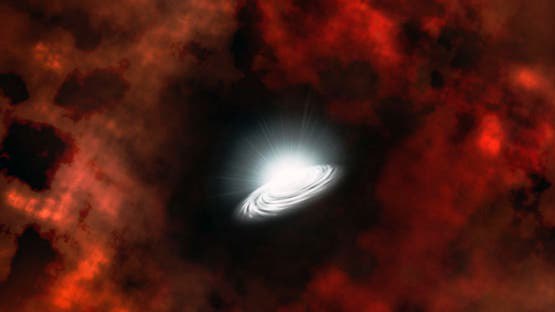
Astronomers have observed the disappearance of a massive star in a nearby galaxy, in a rare phenomenon that may indicate that some stars collapse directly into black holes without going through the known supernova explosion, which could reshape our understanding of star evolution and the distribution of black holes in the universe.
Direct Collapse Instead of Explosion
Researchers explained that this giant star showed no signs of an explosion, suggesting that its core collapsed on itself to form a black hole, a phenomenon known as a "failed supernova." If this phenomenon is common, it could help explain the existence of a greater number of black holes than previously expected and reconsider the role of supernovae in the formation of heavy elements.
Experts' Opinion
Astronomer Emma Beasor from Liverpool John Moores University stated that the phenomenon changes the overall picture of star evolution, but she pointed out that the failure of a supernova explosion is not the only explanation, emphasizing the need to monitor the star to see if it remains dormant.
What Usually Happens to Stars When They Die?
Small stars quietly collapse and turn into white dwarfs.
Massive stars, which are more than 8 times the mass of the sun, rapidly collapse their cores until they reach the density of an atomic nucleus, and usually explode in a supernova; however, this case may change as recent observations have shown.