Severe Climate Variability Around the World.. January 2026 Records Record Cold in Europe and Climate Disasters in the South
February 10, 20261766 ViewsRead Time: 2 Minutes
Font Size
16
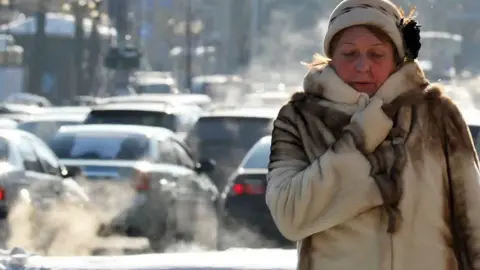
Europe experienced an exceptional cold wave in January 2026, making it the coldest month since 2010, according to data from the Copernicus Climate Change Service of the European Union.
The average temperature in Europe was about -2.34 degrees Celsius, affected by a wavering polar jet stream that pushed extremely cold air masses toward the continent, leading to record low temperatures.
Heat Waves, Fires, and Floods Hit the Southern Hemisphere
While Europe suffered from severe cold, the southern hemisphere experienced completely opposite climatic conditions. Several regions, including Australia, Chile, and Patagonia, recorded unprecedented heat waves that caused widespread fires. Additionally, countries like South Africa and Mozambique faced devastating floods, reflecting the stark contrast in global weather patterns during the same period.
Global Temperature Rise Despite Regional Cold
Globally, data showed that the average surface temperature reached 12.95 degrees Celsius, which is about 0.51 degrees higher compared to the average from 1991 to 2020, and an increase of 1.47 degrees from pre-industrial levels, reflecting the ongoing trend toward global warming despite regional cold waves.
Areas Affected by Severe Cold and Others by Unusual Heat
The cold wave affected vast areas of Finland, Scandinavia, the Baltic states, Eastern Europe, and Siberia, as well as the Midwest and East of the United States. In contrast, temperatures were higher than usual in the Canadian Arctic, Greenland, far eastern Russia, southern South America, most of Australia, and Antarctica.
Heavy Rain and Floods Impact Infrastructure and Agriculture
Wide areas of Western, Southern, and Eastern Europe, including the United Kingdom, experienced higher-than-normal rainfall during the same month, causing floods that damaged infrastructure and the agricultural sector. Conversely, drought conditions prevailed in Central Europe, the northwestern coastal regions of America, and parts of China, Australia, and South America outside the tropical areas.
Warnings of Continued Climate Extremes
Samantha Burgess, the strategic climate officer at the European Centre for Medium-Range Weather Forecasts, confirmed that the events of January 2026 represent a clear example of the climate system's ability to produce extreme and contrasting phenomena simultaneously, emphasizing the importance of enhancing adaptation and resilience plans in the face of rapid climate changes.
Monitoring Polar Ice as an Indicator of Climate Changes
The report concluded by noting the continued monitoring of changes in sea ice in the polar regions as one of the key indicators of global climate changes, amid increasing evidence of human activity's impact on the acceleration of warming and climate extremes worldwide.