Saddam Haftar at the Heart of New International Arrangements.. Is the Power Structure in Libya Being Reshaped from Rome and Paris?
February 20, 20261190 ViewsRead Time: 3 Minutes
Font Size
16
The name Saddam Haftar has resurfaced in the Libyan scene, with leaks about international proposals to restructure the political and military authority, discussed during meetings held in Rome and Paris, as part of efforts to revive the stalled political process.
Proposal to Amend the Head of Authority
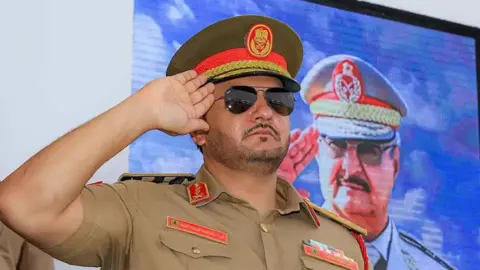
According to what was reported by the "Nova" agency from informed Libyan sources, a vision was discussed that involves Saddam Haftar, Deputy Commander of the Libyan National Army, taking over the presidency of the Presidential Council, succeeding Mohamed Menfi, while keeping Abdul Hamid Dbeibeh as the head of a unified government.
The meetings, mediated by U.S. envoy Musaad Boulos, included Ibrahim Dbeibeh, the Prime Minister's advisor and his nephew, alongside Saddam Haftar himself.
New Military Distribution of Influence
The proposed plan includes a clear redistribution of military leadership positions: Khalid Haftar in the east, and General Osama Nimroush in the northwest, while leaving the southern position undecided. This vision, according to its supporters, aims to create a regional military balance that limits the existing division.
However, the proposal does not yet enjoy internal consensus, amid reservations in the east and west, especially in Misrata, in addition to caution from active regional parties.
Complex Political Challenges
The proposed scenario raises questions about Saddam Haftar's position amid the continued influence of his father, Field Marshal Khalifa Haftar, and his transition from field military leadership to the presidency of the Presidential Council is considered a fundamental shift that may weaken his operational grip on the armed forces, which represent the center of gravity in eastern Libya.
Western sources in Washington described the proposal as "incomplete," with clear difficulties in rallying support from key parties, at a time when the UN path has not yet succeeded in convincing all actors.
The Regional and International Dimension
The political movement coincided with visits by the heads of Turkish and Egyptian intelligence, Ibrahim Kalin and Hassan Rashad, to Tripoli and Benghazi, indicating Ankara and Cairo's interest in the new power balances.
The political file also intersects with increasing economic pressures, as Musaad Boulos emphasized the need for economic and military integration between the east and west, calling for the adoption of a unified budget law as a basis for economic reconciliation.
In this context, representatives of major countries in the Security Council discussed the priority of economic governance, transparency, and the protection of Libyan assets abroad, emphasizing that any political settlement will still require official UN cover.
Who is Saddam Haftar?
Saddam Haftar, born in 1991 in Benghazi, is the youngest son of Field Marshal Khalifa Haftar. He graduated from the Royal Jordanian Military Academy in 2017 and held several military positions, most notably commanding the Tariq Ibn Ziyad Brigade, before being appointed Chief of Staff of the Ground Forces and then Deputy Commander.
His name emerged during rescue operations following the Derna floods in 2023, where he was promoted to the rank of Brigadier General, and later elevated to the rank of Major General.
A Scenario Under Testing
So far, the proposal to name Saddam Haftar in the new leadership of Libya remains just an option among several scenarios, in a scene governed by fragile balances and mutual distrust.
The question remains: Will this proposal turn into a politically supported settlement regionally and internationally, or will it join the list of initiatives that have collided with the complexities of the Libyan reality?