Renewed Activity Indicators in the Mexican Volcano "El Chichón" After Decades of Dormancy
February 10, 20261987 ViewsRead Time: 3 Minutes
Font Size
16
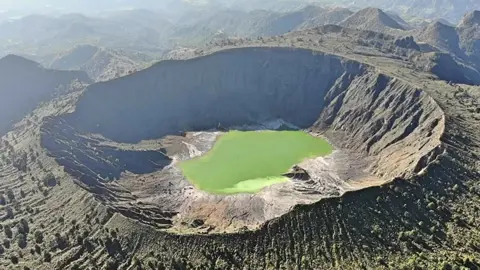
The Chichonal volcano, known as "El Chichón", has returned to scientific attention after recording unusual activity indicators following more than forty years of calm. This development has prompted research teams in Mexico to intensify monitoring operations, fearing that these indicators could evolve into more dangerous volcanic activity in the future.
Thermal Rise and Unusual Gas Emissions Detected
Researchers from the National Autonomous University of Mexico reported that monitoring operations conducted between June and December 2025 revealed a significant increase in temperatures within the volcano's crater, along with unusual gas emissions and the formation of new sulfur deposits. This volcano is considered one of the most dangerous in the country's history, as its eruption in 1982 resulted in the deaths of nearly two thousand people and caused widespread damage.
Color Change of the Crater Lake as a Geological Indicator
Scientists recorded a notable change in the color of the crater lake, which shifted from green to gray, indicating an increase in sulfate and silica concentrations in the water. Thermal measurements also showed a clear rise in temperatures within the lake's bottom and surrounding areas, reflecting internal activity within the volcano's structure.
Toxic Gases Raise Environmental Concerns
Researchers also detected emissions of hydrogen sulfide and carbon dioxide, both of which can pose health risks if accumulated in low or enclosed areas. Scientists emphasize that these emissions require careful monitoring to assess their impact on the surrounding population and environment.
Hydrothermal Activity Does Not Indicate Imminent Eruption
Despite the recorded indicators, experts clarified that the current activity is likely due to hydrothermal interactions occurring as a result of hot groundwater friction with rocks, rather than magma movement beneath the earth's surface. Volcanologist Patricia Jacome Paz confirmed that the observed behavior aligns with limited steam explosions, while seismic data indicates relatively low levels of activity.
Comparison with the 1982 Eruption and Future Warnings
Scientists noted that current data does not resemble the conditions that preceded the devastating eruption in the 1980s; however, they stressed that volcanoes can retain their activity for decades or even centuries after major eruptions. Researchers believe that monitoring subtle changes in temperature, water composition, and gas emissions may provide early indicators of any potential internal transformations.
Modern Techniques to Enhance Monitoring and Public Safety
The research team relies on a range of advanced technologies to monitor the volcano, including remote sensing using satellites and drones, along with field instruments to measure gas emissions and ground deformations. Scientists assert that ongoing monitoring is a crucial factor in reducing potential risks and ensuring the safety of communities near the volcano.