Potential escalation with Tehran.. Will Friday prayers at Al-Aqsa turn into a security test for Israel?
February 27, 2026119 ViewsRead Time: 2 minutes
Font Size:
16
Israeli security estimates revealed potential scenarios linking the timing of Friday prayers at the Al-Aqsa Mosque with the possibility of a sudden confrontation with Iran, amid escalating regional tensions.
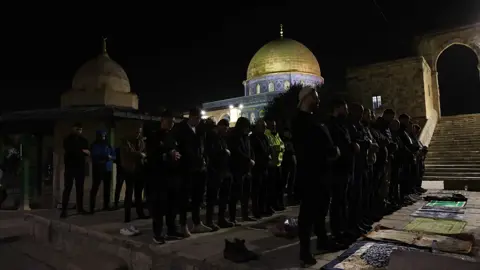
According to a report published by the Hebrew website Walla, security circles in Israel are considering the possibility of any military escalation coinciding with the gathering of thousands of worshippers in the courtyards of Al-Aqsa, especially during the second Friday of Ramadan.
According to a report published by the Hebrew website Walla, security circles in Israel are considering the possibility of any military escalation coinciding with the gathering of thousands of worshippers in the courtyards of Al-Aqsa, especially during the second Friday of Ramadan.
Field preparations and unprecedented alertness
The report indicated that Israeli security agencies intend to enhance their presence in Jerusalem, in anticipation of any sudden security developments. These measures come despite what has been described as “positive” indicators from Washington and Tehran regarding the Geneva negotiations.
In this context, Israeli Defense Minister Israel Katz is conducting ongoing consultations and assessments with military leaders and security agencies, as part of a close follow-up on regional developments.
The missile concern and its implications for Jerusalem
According to Israeli security perceptions, the fall of Iranian missiles on Israel coinciding with Friday prayers could prevent about 10,000 worshippers from reaching the Al-Aqsa Mosque, either due to direct security concerns or as a result of changes in internal front instructions.
Analysts believe that such a step could lead to widespread tension within Jerusalem and the West Bank, especially given the religious and political sensitivities associated with Al-Aqsa during Ramadan.
Potential restrictions and Palestinian fears
For their part, Palestinian security officials reported an increase in public anxiety, fearing that regional developments could lead to stricter restrictions on movement and gatherings, including limiting the number of worshippers.
The Hebrew report pointed to concerns that any Iranian missile attack—whether direct or via proxies—could lead to an immediate change in the directives of the Israeli internal front leadership, including banning large gatherings, particularly Friday prayers.
Between military calculations and the sensitivity of the religious scene
If a decision is made to prevent thousands of Palestinians from entering the courtyards of Al-Aqsa, the Israeli security establishment is aware that such a step could ignite a wave of disturbances and protests, at a time that is extremely sensitive both regionally and locally.
Thus, the scene stands at a highly sensitive intersection: a potential military escalation with Iran on one hand, and a religious season witnessing a large gathering at one of the most sacred and tension-inducing sites in the region on the other hand, making any calculated security decision crucial to avoid a wider explosion.

