Iran Flirts with Trump through Major Oil Offers.. Will 'Economic Diplomacy' Succeed in Preventing Confrontation?
February 21, 202694 ViewsRead Time: 3 minutes
Font Size:
16
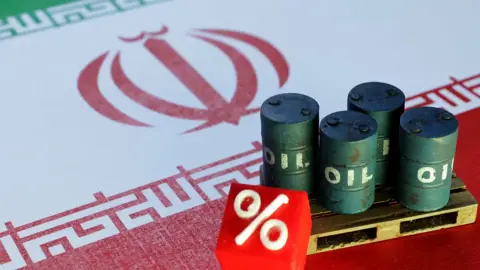
In a clear attempt to avoid a potential military confrontation with the United States, Tehran has intensified its economic messages to the administration of President Donald Trump, offering what diplomatic circles describe as "enticing deals" in the oil, gas, and aviation sectors, coinciding with ongoing nuclear negotiations.
According to a report published by the Monitor website, the Iranian offer carries an unofficial striking title: "Business.. Not Bombs" — a direct reference to trying to address Trump in the language of economics and investment, which he has often presented as a priority in his foreign policy.
According to a report published by the Monitor website, the Iranian offer carries an unofficial striking title: "Business.. Not Bombs" — a direct reference to trying to address Trump in the language of economics and investment, which he has often presented as a priority in his foreign policy.
Oil and Gas Offers and Billions in Investments
Iranian Oil Minister, Mohsen Paknejad, confirmed that cooperation with Washington in the energy sector is "possible" if negotiations yield positive results.
For his part, Deputy Foreign Minister for Economic Affairs, Hamid Ghanbari, emphasized during a meeting of the Iranian Chamber of Commerce on February 15 that the files of oil and gas, mining, and aircraft purchases are on the negotiating table, stressing the need to achieve tangible economic returns for any potential agreement.
The Iranian message seems clear: Iran is not a battlefield.. but a massive investment opportunity.
Betting on the 'Deal-Making Mentality'
Tehran is trying to capitalize on what it considers a trend in Trump that prioritizes business interests over military confrontations. Observers believe that some regional intermediaries have encouraged this path, believing that a broad economic offer may be more appealing to the American president than the option of escalation.
However, this bet faces serious doubts. The Monitor quoted analysts saying that the chances of reaching an agreement that allows for direct American investments inside Iran remain extremely weak, given the accumulated sanctions, the complex legal environment, and the historical animosity towards American companies.
The Specter of the 'Venezuelan Scenario'
As American pressures escalate, some observers have begun to compare the Iranian situation to what happened in Venezuela after the ousting of President Nicolas Maduro, when Washington rushed to rearrange the oil scene there.
In this context, the President of the American Petroleum Institute hinted at the readiness of American energy companies to play a role in "stabilizing" the Iranian energy sector if the political equation changes.
The report suggests that Tehran's talk of opening doors to investment may be a preemptive attempt to avoid a similar scenario, by hinting at partnership instead of risking a forced restructuring of its oil sector.
Sanctions Hinder Any Breakthrough
Despite the conciliatory rhetoric, the American sanctions imposed since the 1980s remain a structural barrier to any direct cooperation. Additionally, current Iranian laws do not easily allow for the partnerships needed to attract major American companies.
An American official recently indicated that Washington is considering the possibility of easing some financial restrictions or the ban on oil sales, but any step of this kind would require complex political and security arrangements.
A Precedent That Does Not Inspire Optimism
The report reminds that Iran had previously presented itself in April 2025 as a "trillion-dollar" investment opportunity to the United States, through its Foreign Minister Abbas Araqchi, yet that did not prevent Washington later from targeting Iranian nuclear sites in June of the same year.
Here arises the most important question:
Is the language of deals sufficient to deter the option of force, or is economic diplomacy merely a temporary station before a more difficult test?
As the negotiation deadline approaches and regional tensions escalate, Tehran seems determined to present the economy as a bridge to cross... but the final decision may be made outside the meeting rooms, in the calculations of power and major interests.
