Beijing Races Against Time to Build Artificial Island Off Vietnam to Assert Its Dominance in the South China Sea
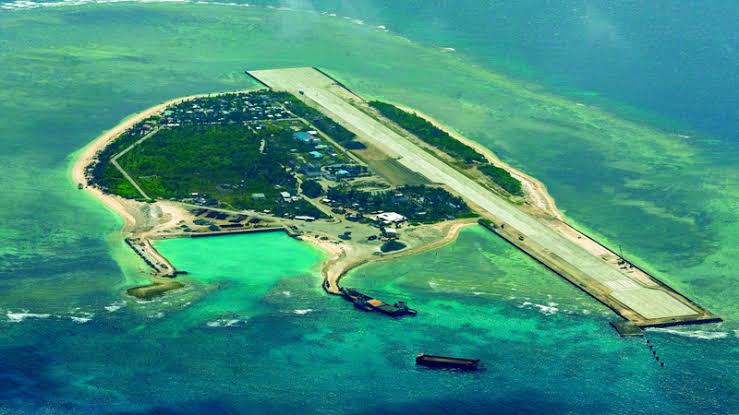
Recent satellite images analyzed by the "New York Times" reveal an accelerated pace of Chinese construction operations to build a new artificial island in a disputed water area off the Vietnamese coast.
The imagery data shows that Beijing has developed rapid land reclamation and construction techniques in recent months, a move that military observers see as an attempt to impose a new geographical and political reality in one of the world's busiest and most sensitive waterways, escalating tensions in the Indo-Pacific region.
"Sand Base" Strategy to Enhance Military Influence
This Chinese activity is part of a broader strategy aimed at solidifying a permanent military presence in the South China Sea. Once its logistical facilities are completed, this new island will provide Beijing with an advanced base for maritime and aerial surveillance operations, enhancing its ability to enforce a "defensive identification zone" over waters that Vietnam and other countries consider part of their continental shelf. Analysts believe that building artificial islands has become Beijing's preferred tool to counter international maritime presence and assert its sovereignty over the controversial "nine-dash line."
Direct Threats to Global Navigation and Trade Security
The construction of this island poses a direct challenge to freedom of navigation in a waterway through which global trade worth trillions of dollars flows annually. International powers, led by the United States and the European Union, fear that transforming these coral formations into military bases equipped with radar and missile platforms will give China the ability to exert full control over the movement of commercial ships and tankers. This field escalation, observed by satellites on Thursday, presents the international community with a real test of maritime international law, which Beijing refuses to recognize regarding its decisions related to these disputes.
Vietnamese Reactions and Growing Regional Concerns
On the other hand, Hanoi is closely monitoring these developments near its shores, considering the construction of this island a violation of its sovereignty and a breach of the conduct agreements signed between China and ASEAN countries. Experts believe this step may push Vietnam to strengthen its security alliances with Washington and other regional powers to balance military power. As Beijing continues to impose a "fait accompli" policy, attention turns to the upcoming summit of Southeast Asian nations to discuss ways to curb Chinese expansion that has shifted from mere political statements to concrete facilities in disputed waters.