Unprecedented Decline in Salinity of the Southern Indian Ocean Raises Concerns Among Scientists
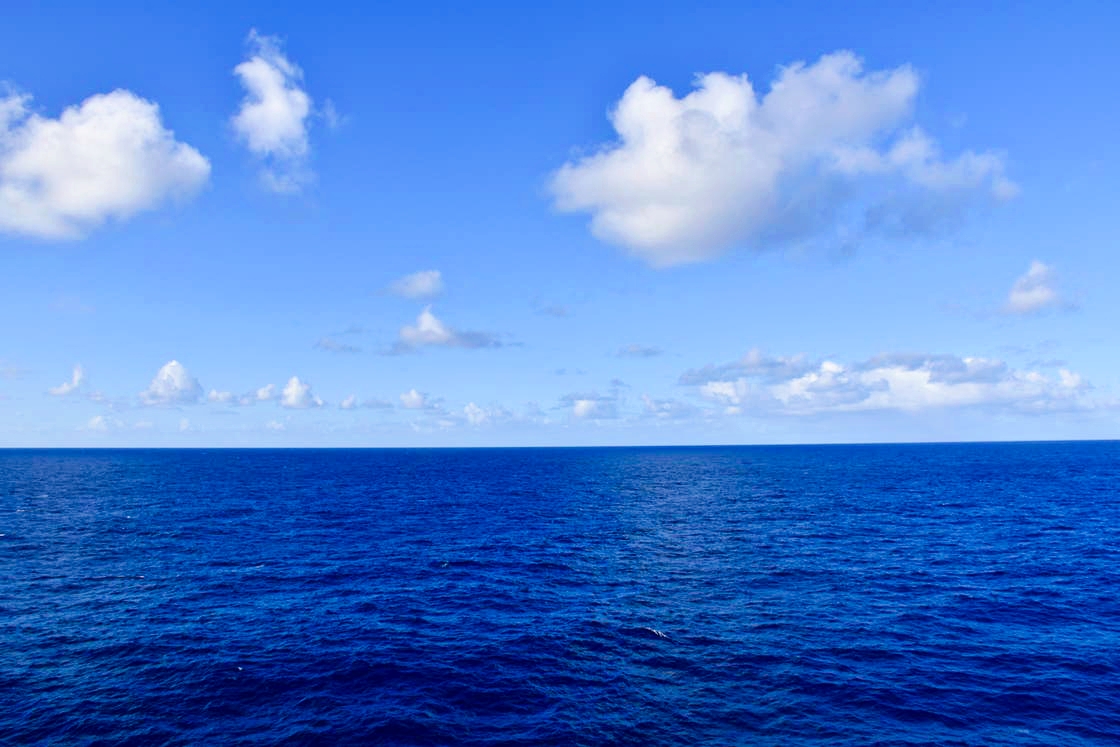
The Southern Indian Ocean off the west coast of Australia is experiencing a remarkable transformation, as salinity levels are decreasing at a rate not seen anywhere else in the Southern Hemisphere, sparking interest among scientists worldwide.
Salinity levels in seawater indicate how water layers accumulate, how currents transport heat around the planet, and how nutrients reach the sunlit surface where most marine life begins.
* Rising Temperatures Reshape Ocean Currents
A study published by SciTechDaily in the journal Nature Climate Change has shown that global temperature increases over the past sixty years have altered major wind patterns and ocean currents.
This shift has led to increased flows of freshwater into the Southern Indian Ocean, threatening to reshape the interaction between the ocean and the atmosphere, affecting global circulation systems that regulate climate, and placing significant stress on marine ecosystems.
Professor of Atmospheric and Oceanic Sciences Wei Qing Han stated:
"We are witnessing a large-scale shift in the movement of freshwater across the ocean. These changes are occurring in a region that plays a pivotal role in global ocean circulation."
* Freshwater Convergence and the Conveyor Belt
Scientists indicate that a large portion of the freshwater originates from a vast equatorial region extending from the eastern Indian Ocean to the western Pacific Ocean, where heavy rainfall reduces surface salinity and maintains its relative purity.
This area is known as the "Freshwater Convergence of the Indian and Pacific Oceans."
This convergence connects to what is known as the thermohaline circulation or the "conveyor belt," a global system of currents that transports heat, salt, and freshwater between ocean basins, even affecting conditions in the Atlantic Ocean, where cold, dense water sinks northward and then returns southward through the depths to complete the ocean cycle.
* Unprecedented Salinity Decline
Typically, the waters off southwest Australia are rich in salt due to evaporation exceeding rainfall, but long-term observations show that this balance is beginning to change.
Han's team estimates that the area of saline water in this region has decreased by about 30% over the past sixty years, representing the fastest salinity decline in the Southern Hemisphere.
Lead researcher Jingxin Chen from the South China Sea Institute of Oceanology at the Chinese Academy of Sciences explained that the volume of freshwater flowing in is equivalent to adding about 60% of the amount of water in Lake Tahoe each year, enough to supply the entire population of the United States with drinking water for over 380 years.
* Less Dense Water and Impacts on Marine Life
As freshwater flow increases, seawater becomes less dense and tends to remain above the heavier saline water, increasing the stratification between surface and deep layers and limiting the vertical mixing that transports heat and nutrients in the ocean.
This could lead to direct harm to marine life, as nutrients in the upper layers that marine organisms depend on decrease, and heat is trapped near the surface, exacerbating the stress of rising ocean temperatures on marine organisms.
Chen noted:
"Salinity changes can affect plankton and seagrass, which are the foundation of the marine ecosystem, potentially leading to long-term impacts on ocean biodiversity."
As these rapid changes in salinity continue in the Indian Ocean, scientists warn that what is happening may be an indicator of broader shifts in ocean circulation and global climate systems, making monitoring this phenomenon and understanding its implications for the marine environment vital for the planet's future.