The Security Council Approves the Final Extension of the Hudaydah Mission in Yemen
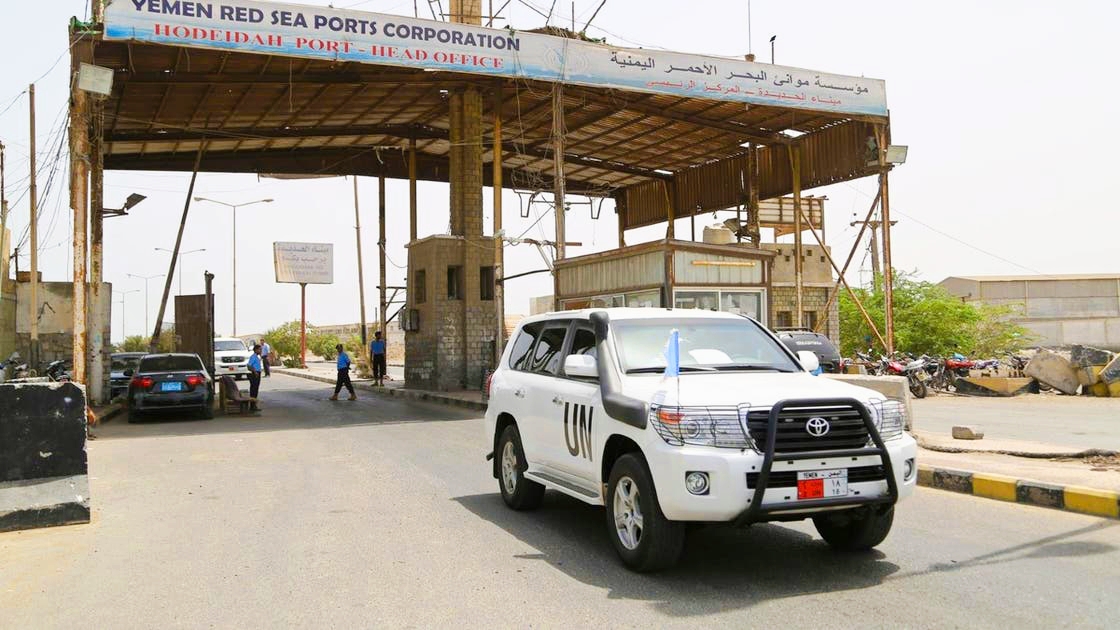
In a move that reflects a clear shift in the international stance towards the United Nations Mission to Support the Hudaydah Agreement (UNMHA), the UN Security Council adopted a resolution yesterday evening, extending the mission's mandate until March 31, 2026, amid growing conviction of its failure to achieve any significant breakthrough since its establishment seven years ago.
The resolution, numbered 2813 and proposed by the United Kingdom, received support from 13 countries, while Russia and China abstained from voting, indicating a division within the council regarding the future of the UN presence in the Yemeni city of Hudaydah.
* Plan for Ending and Transferring Tasks
The resolution requests UN Secretary-General Antonio Guterres to prepare a comprehensive plan _in consultation with the Yemeni parties_ that includes transferring the remaining tasks of the mission to the UN Special Envoy to Yemen, along with arrangements for the organized and safe withdrawal of mission personnel and assets, effectively paving the way for the termination of "UNMHA".
The UK representative to the UN, Archie Young, expressed his hope for an "orderly and sustainable" transition of the mission's responsibilities to the office of the UN envoy, affirming the Security Council's continued commitment to the Hudaydah and Stockholm agreements and support for UN efforts to facilitate the peace process in Yemen.
* Russian and Chinese Reservations
In contrast, the Russian Deputy Ambassador to the UN, Anna Evstigneeva, stated that the "UNMHA" mission has played an important role since its inception in promoting stability, monitoring the implementation of the Stockholm Agreement, and maintaining the civilian nature of Yemeni ports, arguing that its termination could weaken trust-building opportunities and create conditions for comprehensive Yemeni dialogue.
Chinese Ambassador Fu Cong warned that a withdrawal within two months could be "premature," urging the Security Council to pause and assess the situation on the ground in Hudaydah, fearing that it could destabilize the area and ignite a new round of conflict, noting that the mission has maintained communication channels with both parties to the conflict for seven years, monitored the ceasefire, and carried out humanitarian activities.
* International Acknowledgment of Mission Failure
According to the draft resolution, the field presence of the mission will be gradually reduced, a step that observers describe as a clear international acknowledgment of "UNMHA"'s inability to make substantial progress in implementing the Stockholm Agreement signed in December 2018.
The current mandate of the mission was set to end on January 28, 2026, following the last extension issued under resolution 2786 in July 2025.
* Complex Environment and Ground Inability
In a previous report, the UN Secretary-General clarified that the mission operates in a highly complex security environment and faces significant challenges in executing its mandate, particularly amid ongoing Houthi attacks in the Red Sea and targeting of civilian areas, which has constrained its ability to implement the terms of the Hudaydah Agreement.
The report indicated that the Houthi group considers any termination of the mission as an official cancellation of the agreement, reflecting the political and symbolic dimension of the UN presence, despite the ongoing inability to enforce commitments on the ground.
* Integration of the Mission and Restructuring
Guterres proposed integrating the "UNMHA" mission into the office of the Special Envoy to Yemen, Hans Grundberg, to enhance coordination between political, humanitarian, and security tracks, and unify efforts to achieve more effective results.
Analysts believe that the continuation of the mission in its current form has given the Houthis room for political and military maneuvering, while international parties push for restructuring UN missions to ensure better oversight and achieve tangible results.
For its part, the Yemeni government asserts that the "UNMHA" mission has failed since its establishment in 2019 to enforce commitments, ensure military withdrawal, protect civilians, and prevent the exploitation of ports.
* Seven Years Without Breakthrough
It is worth noting that the "UNMHA" mission was established in 2019 to support the Stockholm Agreement between the Yemeni government and the Houthis, taking on tasks to monitor the ceasefire, facilitate the redeployment of forces, and support humanitarian operations in Hudaydah ports, but security and political complexities have prevented any real progress, leading to the end of its mission today amid major questions about the effectiveness of international interventions in the Yemeni conflict.