Syria Advances 36 Places in Press Freedom
April 30, 20265518 ViewsRead Time: 2 Minutes
Font Size
16
Reporters Without Borders released its annual report for 2026, marking a significant advancement for Syria in the Press Freedom Index.
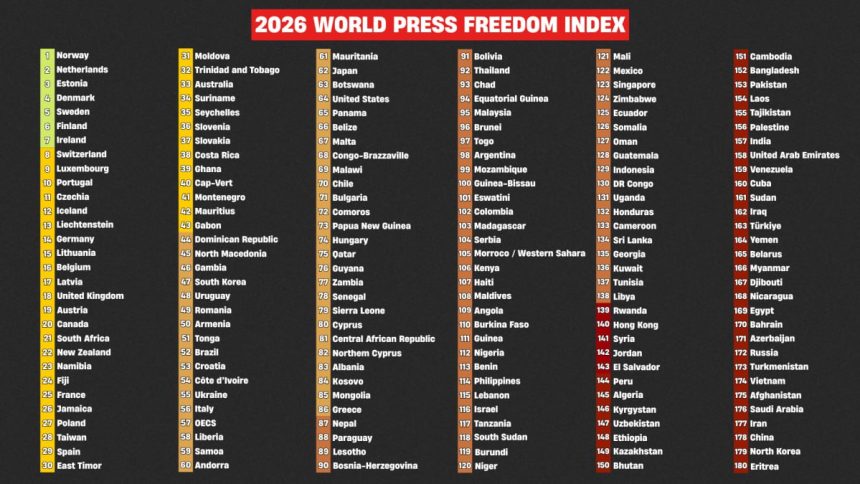
According to the report, Syria rose 36 places to reach 141st globally after being ranked 177th last year.
What are the reasons for Syria's improved ranking in press freedom?
The organization noted that the improvement encompassed all five indicators: legal, political, economic, social, and security.
The report also linked this development to political changes that occurred in the country since late 2024.
How has the media landscape changed in Syria?
According to the report, some media outlets have resumed operations within the capital, Damascus, after years of suspension or operating from abroad.
Global news agencies have also resumed their activities in Syria, contributing to the reshaping of the media environment.
Has the legal and media situation improved in Syria?
Reporters Without Borders clarified that the old legal framework that restricted the media has ceased to function.
In contrast, the new authorities have pledged to support “free journalism” and ensure freedom of expression.
What are the main challenges still facing journalism in Syria?
Despite the progress, the report indicates ongoing economic and social challenges affecting media independence.
It also pointed out that the previous division in the country still leaves an impact on the journalistic environment.
What does the global ranking of press freedom look like?
The report showed that the global state of press freedom is facing a general decline, with more than half of the countries classified as having a “difficult or dangerous situation.”
Norway topped the ranking, while countries like Eritrea remained at the bottom of the list.