Smart Clothing at a New Level: A Single Thread Controls Health and Technology
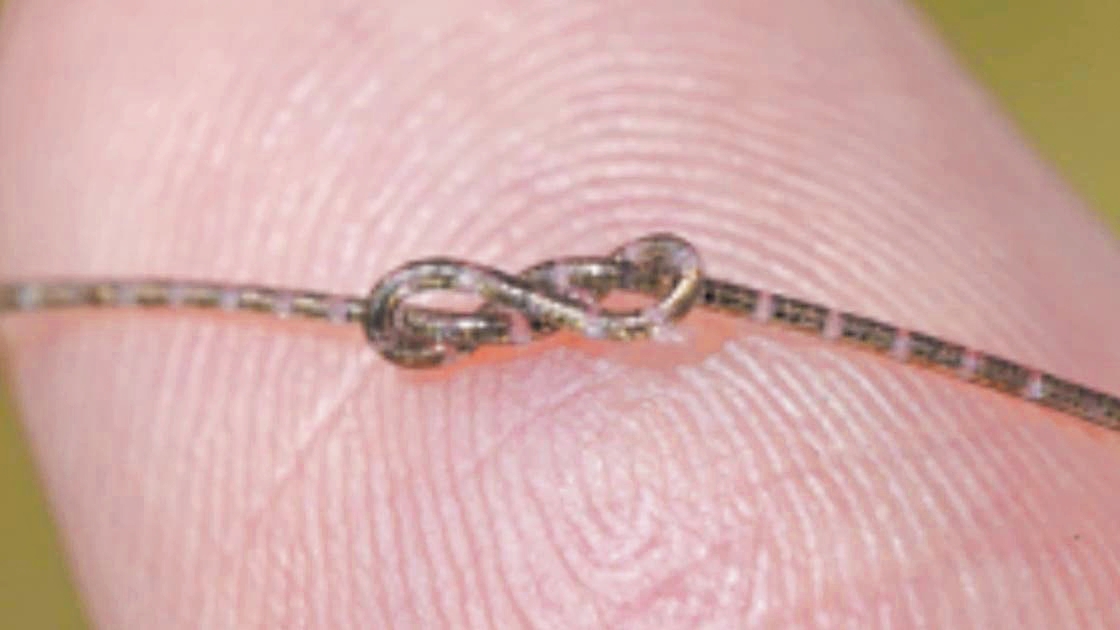
Imagine that your shirt is no longer just a piece of fabric to wear, but a comprehensive technological platform capable of monitoring your health moment by moment, automatically regulating your body temperature, tracking your movements, and even guiding you to the nearest restaurant or tourist attraction… all without you feeling any difference in texture or appearance.
This vision is no longer science fiction, but a reality after a team of researchers at Fudan University in Shanghai succeeded in creating a supercomputer within a thread thinner than a human hair, according to what was published by NewAtlas citing the journal Nature.
* "Thinner than a Human Hair"
The researchers were able to build complex electronic circuits within flexible fibers with a diameter of about 50 micrometers, which is thinner than a normal human hair that has a diameter of about 70 micrometers.
They named these circuits "fiber chips".
Unlike traditional smart fabrics, which rely on attaching electronics to the surface of the fabric, the team integrated the electrical circuits in the form of helical layers within the fibers themselves, making them flexible and stretchable without losing their functions.
* Amazing Processing Power
The fiber chip contains 10,000 transistors in just 1 millimeter of fiber, which is roughly equivalent to the capacity of a standard pacemaker.
For comparison, if the thread is stretched to a length of one meter, it could contain millions of transistors, giving it processing power comparable to a traditional desktop computer.
Each thread also contains resistors, capacitors, and diodes, forming a hybrid system capable of processing both digital and analog signals.
Researcher Chen Bening from the Institute of Fiber Materials and Devices at Fudan University confirmed that the method of manufacturing these helical circuits is compatible with current chip manufacturing technologies, and that the team has developed a method that allows for large-scale production.
* Flexibility Similar to Brain Tissue
The advantage of the microfibers is not only their small size but also their exceptional flexibility, which resembles the elasticity of brain tissue, making them strong candidates for neuro-medical applications, such as smart implants and brain function monitoring.
* Treating Neurological Diseases
Bing Huixing, the study leader, said: "The human body is made up of soft tissues, so emerging fields, such as future brain-computer interfaces, require flexible and moldable electronic systems."
This technology can be used to treat symptoms of Parkinson's disease, epilepsy, and stroke, or integrated into precise tools and equipment that act as advanced sensors.
* Rigorous Endurance Testing
The team did not stop at producing the prototype; the computing thread underwent tests simulating daily life:
• It withstood over 10,000 bending and rubbing cycles.
• It endured stretching of up to 30%.
• It succeeded in 100 washing cycles without losing performance.
• It withstood temperatures of up to 100 degrees Celsius and pressures equivalent to the weight of a 15.6-ton truck.
With this achievement, the world is taking a huge step closer to super-capable smart clothing that can monitor and heal the body, integrating electronic devices into our daily lives in ways that were previously unimaginable.


