Rare Shark Sighted in the Depths of the Southern Pole Sparks Scientists' Interest
February 17, 202697 ViewsRead Time: 2 minutes
Font Size:
16
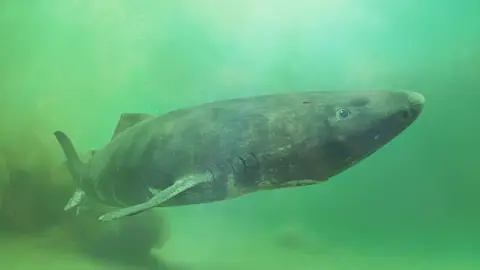
A team of scientists recorded a rare sighting of a type of shark in the depths of the ocean near the South Shetland Islands, in a phenomenon that is one of the few documented occurrences of these creatures in extremely cold waters.
The sighting occurred during a scientific mission led by oceanographer Jessica Kolbous from the University of Western Australia, where the shark was observed at a depth of approximately 490 meters below the water's surface, in an environment with a temperature not exceeding 1.27 degrees Celsius.
The sighting occurred during a scientific mission led by oceanographer Jessica Kolbous from the University of Western Australia, where the shark was observed at a depth of approximately 490 meters below the water's surface, in an environment with a temperature not exceeding 1.27 degrees Celsius.
First Visual Documentation in the Southern Ocean
Kolbous confirmed, in statements reported by the Australian Broadcasting Corporation (ABC), that the footage is the first of its kind for a sleeper shark or any type of shark or ray in the waters of the Southern Ocean, noting that the scene was surprising to the researchers.
She explained that the significant similarity between these types of fish prevented the precise identification of the shark through the recorded footage, but the team collected samples from the area for DNA analysis, hoping to achieve accurate scientific identification.
Characteristics of Sleeper Sharks
Sleeper sharks are known for their slow movement and adaptation to harsh marine environments, possessing spotted skin and small fins that help them live in cold depths, and they are among the creatures that are rarely seen in such areas.
Previous Sighting in the Depths of the Pacific Ocean
This was not the first time Kolbous had sighted this type of shark, as she managed to document a similar appearance in the Tonga Trench in the southwestern Pacific Ocean at a depth of approximately 1400 meters, where the footage showed the shark while it was consuming bait attached to a research camera, allowing scientists to study details of its mouth and feeding behavior.
Scientific Importance of the Discovery
This sighting represents an important addition to research related to marine organisms living in the depths of cold oceans, as it contributes to expanding scientists' understanding of how these species adapt to harsh environments and provides researchers with new indicators about the distribution of sharks in areas that were not previously considered within their range.


