Paris Summit to Discuss Reopening the Strait of Hormuz Led by Macron and Starmer
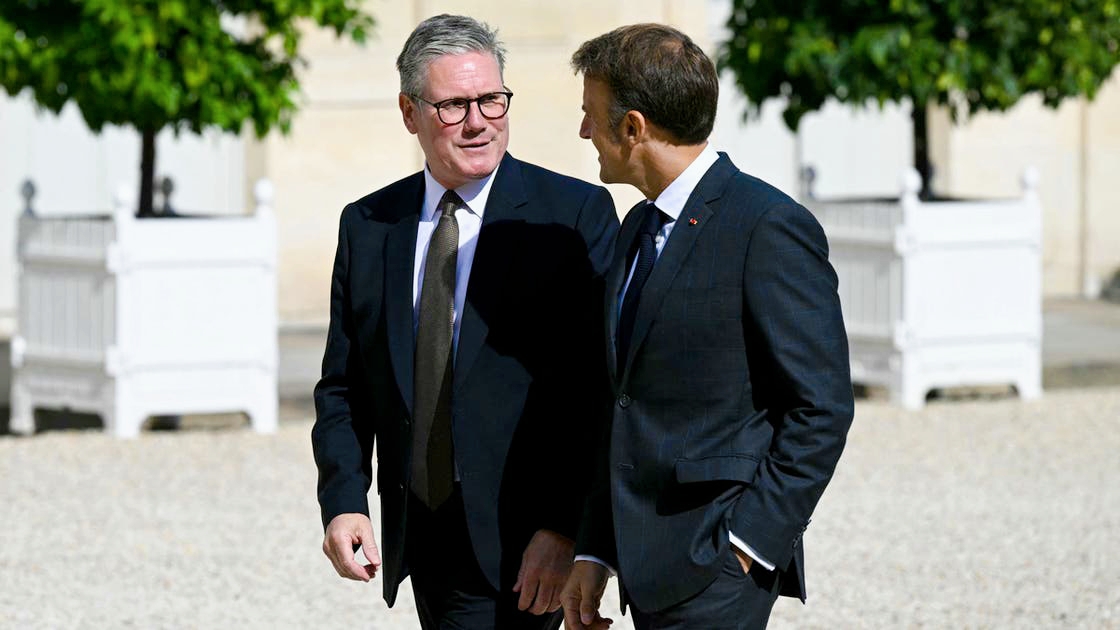
International Meeting in Paris to Discuss the Strait of Hormuz Crisis
Today, an international summit is taking place in the French capital, Paris, involving dozens of countries, led by French President Emmanuel Macron and British Prime Minister Keir Starmer, to discuss plans to reopen the Strait of Hormuz, which has been closed due to the ongoing war.
This move comes as part of international efforts to address the repercussions of closing one of the world's most important maritime corridors for energy transport.
Closure of the Strait and Its Impact on the Global Economy
Data indicates that the Strait of Hormuz was effectively closed after the outbreak of war between the United States, Israel, and Iran on February 28, which is the passage through which about one-fifth of global oil supplies flow.
This closure has led to significant disruption in global energy markets and heightened levels of international economic anxiety.
“Maritime Freedom Initiative” Without U.S. Participation
These meetings are taking place under what is known as the “Maritime Freedom Initiative in the Strait of Hormuz,” which does not involve the United States.
The initiative aims to secure the maritime corridor through international coordination led by countries not involved in the conflict, in an attempt to find secure alternatives to ensure the continuation of trade and energy flow.
Purely Defensive Security Mission and Conditional Deployment
French President Emmanuel Macron confirmed that the proposed mission to secure navigation in the strait would be “purely defensive” and limited to non-combatant countries.
He also clarified that the deployment of any forces or naval missions will only occur when security conditions allow, as part of efforts to reduce the likelihood of military escalation.
Macron and Starmer's Stances and Increased Pressure on Iran
Macron and Starmer have led escalating diplomatic efforts to pressure Iran, with Starmer accusing it of “taking the world economy hostage” by closing the strait.
This coincides with the imposition of an American blockade on Iranian ports, which has contributed to increased tensions and raised global economic risks.
Absence of Washington and the Economic Impact of the U.S. Blockade
The United States is not participating in the planning of this initiative, despite announcing a blockade on Iranian ports.
This escalation has increased pressure on the global economy at a time when the energy crisis is worsening due to the disruption of one of the most important international oil transport routes.
Calls for Immediate Reopening of the Strait
British Prime Minister Keir Starmer stated before the meeting that the reopening of the Strait of Hormuz should be “immediate and unconditional,” emphasizing that the responsibility for ensuring the free flow of energy and trade lies with the entire international community, given the increasing risks to the global economy.
The Importance of the Strait of Hormuz to the Global Economy
The Strait of Hormuz represents a strategic artery for global energy, through which a large portion of oil and gas exports pass.
Therefore, any disruption to navigation in it directly affects energy prices and the stability of international markets, making its reopening a major economic and political priority.