Nuclear and Hormuz Strait Fail US-Iran Negotiations in Pakistan
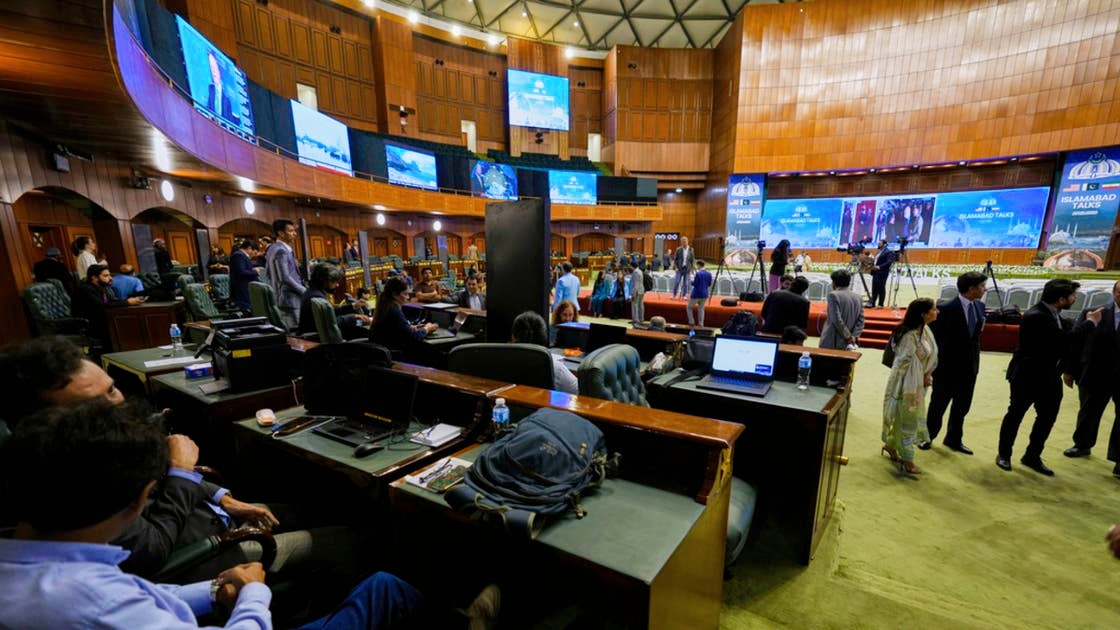
Islamabad Negotiations End Without Agreement Between the United States and Iran
The U.S. administration announced that peace negotiations between the United States and Iran, held in the Pakistani capital Islamabad, ended without reaching an agreement, after the Iranian side refused to accept U.S. conditions regarding halting nuclear weapon development and abandoning some strategic demands.
U.S. Vice President J.D. Vance confirmed that the U.S. delegation presented the "best final offer," but the negotiations ended early without positive results.
Fundamental Disputes Over Enriched Uranium and Iran's Nuclear Program
Media reports, including from The New York Times and Axios, indicated that the main points of contention were Iran's refusal to relinquish its stockpile of enriched uranium, along with its continued development of its nuclear program.
The U.S. side confirmed that this point was a prerequisite for any potential peace agreement, while Tehran considered these demands to infringe on its sovereignty and national security.
Iranian Demands for Control Over the Hormuz Strait in Negotiations
Reports indicated that among the disputes was Iran's demand to increase its influence or control over maritime traffic through the Hormuz Strait, which was met with a firm U.S. rejection.
Washington believes that this strategic maritime corridor should remain open for international navigation without any restrictions or unofficial fees.
Trump Announces Maritime Blockade on the Hormuz Strait
U.S. President Donald Trump announced via his platform "Truth Social" that the U.S. Navy has begun implementing a "maritime blockade" on the Hormuz Strait immediately, including intercepting ships heading to or leaving it.
He added that any ships that paid fees to Iran for passage would not be allowed safe passage, noting that other countries may join this military and maritime action.
Washington: Lack of Trust Behind Negotiation Collapse
U.S. Vice President J.D. Vance stated that the U.S. delegation showed great flexibility during the negotiations, but Iran did not demonstrate sufficient willingness to accept U.S. conditions, leading to the complete breakdown of dialogue.
He confirmed that the U.S. delegation would return to Washington after failing to reach any agreement.
Iranian Position: Lack of Trust-Building with the United States
For his part, Iranian Parliament Speaker Mohammad Baqer Qalibaf, who led the Iranian delegation, stated that Washington failed to build trust during the negotiations, despite offering proposals he described as "constructive."
He confirmed that Iran believes U.S. conditions did not meet its aspirations and did not provide sufficient guarantees to end tensions in the region.
Escalating Tensions and Possibilities of a New Crisis Phase
The collapse of the Islamabad negotiations comes at a time when the Middle East is experiencing rising tensions, with possibilities of maritime and political escalation following the announcement of strict U.S. measures in the Hormuz Strait, one of the most important strategic passages in the world.