Nuclear Talks in Muscat Put Iran in Complex Choices Between Diplomacy and Military Escalation
February 8, 2026187 ViewsRead Time: 3 minutes
Font Size:
16
A report published by "The Monitor" revealed the challenges Iran faces following the latest round of nuclear talks hosted by Oman, as Muscat seeks to bridge the views between Tehran and Washington.
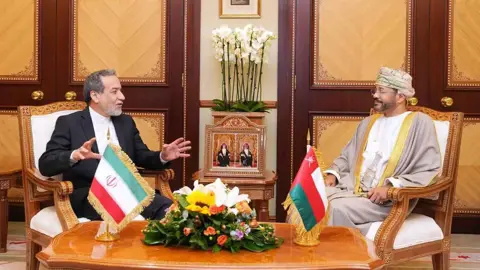
Iranian Foreign Minister Abbas Araqchi described the discussions as a "good start," noting that the meetings involved indirect and intensive discussions between the two sides, during which concerns and visions were exchanged without reaching detailed agreements.
Iranian Foreign Minister Abbas Araqchi described the discussions as a "good start," noting that the meetings involved indirect and intensive discussions between the two sides, during which concerns and visions were exchanged without reaching detailed agreements.
Extensive American Demands and a Dual Approach
According to the report, the United States seeks an agreement that goes beyond the nuclear file to include Iran's missile program and Tehran's support for armed groups in the region, in addition to internal issues related to human rights.
The negotiations were mediated by Oman between Araqchi and American envoy Steve Wietkoff, with the presence of high-level diplomatic delegations, at a time when Washington has strengthened its military presence in the region as part of a strategy that combines deterrence and diplomatic action.
Mutual Pressures During Negotiations
The report indicated that Iran attempted to push for a reduction of the American military presence in the region, while Washington insists on maintaining a policy of parallel pressure alongside negotiation.
Iranian media considered the participation of the American Central Command leader in the talks as a psychological pressure message, while hardline analysts viewed Tehran's efforts as a way to raise the cost of any potential confrontation during negotiations without appearing to retreat.
Regional Tensions Complicate the Scene
The talks are directly affected by regional tensions, especially amid Israeli warnings that the region is approaching a dangerous turning point that could threaten the stability of the Iranian regime.
There are also increasing fears within Iran that external pressures could lead to internal unrest, especially after the recent wave of protests, which makes the negotiation file also linked to the stability of the political system in the country.
A Military Arsenal Strengthens Iran's Leverage
The report noted that Iran has extensive military options in the event of negotiations collapsing, including a missile arsenal estimated at around two thousand ballistic missiles capable of targeting American bases in the Middle East.
Tehran also relies on combat methods that include drones and fast boats in the Gulf, in addition to its relationships with armed allies in Iraq, Lebanon, and Yemen, despite the potential consequences of expanding any possible conflict.
A Strategy Balancing Negotiation and Escalation
The report suggests that the Iranian leadership relies on a strategy that balances calculated escalation with diplomatic openness, aiming to avoid a comprehensive military confrontation while maintaining its regional influence.
Tehran also bets on Washington's hesitation to engage in a new costly and prolonged war, given past experiences in Iraq and Afghanistan.
An Uncertain Future for the Negotiation Path
Despite the continuation of diplomatic channels, the report emphasizes that the absence of any real breakthrough so far reflects the depth of disagreements between the two sides, at a time when military pressures coincide with ongoing negotiations.
The future of the talks remains contingent on political decisions in both Tehran and Washington, amid a complex equation that limits the chances of reaching a comprehensive settlement at this stage.


