Japan Pressures Washington for Stronger Public Support for Prime Minister After Taiwan Crisis
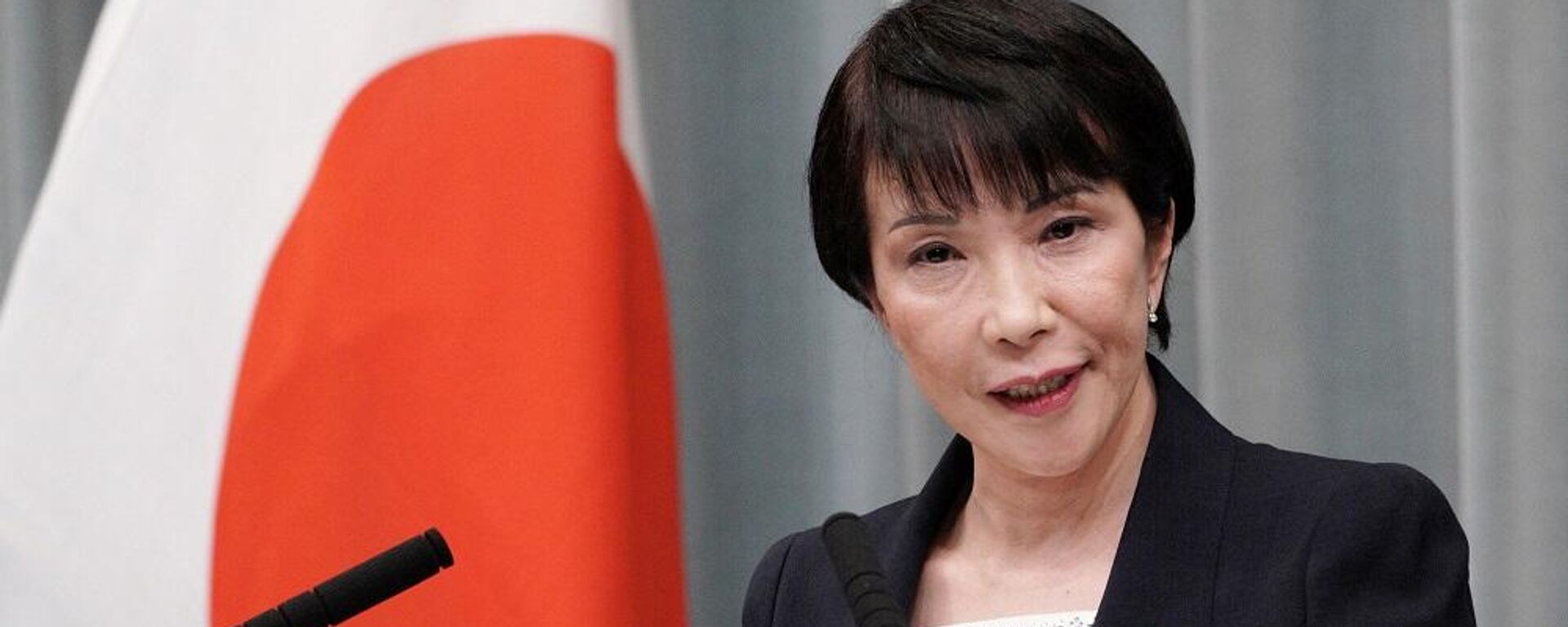
Japan has urged the United States to provide stronger public support for Prime Minister Sanae Takaichi amid rising tensions with China following her remarks about Taiwan, in which she described any potential Chinese attack as an "existential threat" justifying the deployment of Japanese forces. Takaichi's comments angered Beijing, which responded with economic threats and warnings to its citizens against traveling to Japan.
According to U.S. and Japanese officials, Tokyo believes that senior officials in Washington have not provided sufficient support in the face of China's attack on Takaichi. The "Financial Times" reported that Japan's ambassador in Washington, Shigeo Yamada, requested the Trump administration to enhance public support for the Prime Minister.
Japanese media reported that Defense Minister Shinjiro Koizumi revealed an incident last Saturday, where Chinese warplanes directed their radars towards Japanese fighters near Okinawa, describing the situation as "extremely regrettable".
For its part, Washington has limited its positions, with U.S. Ambassador to Japan George Glass stating last month that "Trump and his team support her," but other public statements have been rare. This comes as Trump ordered his team to avoid steps that might threaten the trade agreement he made with Chinese President Xi Jinping last October.
Meanwhile, a Japanese official clarified that the country does not doubt the U.S. commitment to it, but feels disappointed by the lack of public support. In the same context, Christopher Johnston, a former official on Japan at the White House, stated that "this was the clearest statement made by a Japanese Prime Minister regarding Japan's commitments to the U.S. in the event of an emergency related to Taiwan," adding: "Regardless of whether it was wise to announce this publicly, it was a statement that Washington should have supported. However, apart from messages from the U.S. embassy in Tokyo, the matter was met with near-complete silence."
Diplomatic sources indicated that the absence of U.S. support seemed illogical, especially since Elbridge Colby, Assistant Secretary of Defense for Strategy, had previously pressured Tokyo to clarify its role in the event of a war between Washington and Beijing over Taiwan. Despite U.S. promises for a strong statement, it was limited to a brief post on the platform "X" from the Deputy Spokesperson for the State Department.
This week, U.S. Deputy Secretary of State Chris Landau spoke with Takihiro Funakoshi, Director of Foreign Affairs at the Japanese Foreign Ministry. Washington reaffirmed its commitment to the alliance, but the statement did not address China's response to Takaichi's remarks.
For his part, Trump has not issued any public support for the Prime Minister, despite the warm relationship they shared during a meeting in Tokyo. When asked by the White House about the Japanese request, it simply stated that Trump described his relationship with her as "wonderful." Dennis Wilder, Senior Advisor for Asian Affairs in the George W. Bush administration, considered that "the absence of public statements supporting Prime Minister Sanae Takaichi from the White House and State Department is puzzling and undoubtedly raises concerns for both Tokyo and Taipei."
In an interview with "Fox News," Trump was asked about a post made by the Chinese consul general in Osaka suggesting that Takaichi should be "killed," stating: "If a dirty neck extends itself without invitation, we will cut it off immediately without hesitation." Trump responded by saying: "Many of our allies are not our friends," without providing support for her. Randy Schriver, head of the "Institute for Indo-Pacific Security," said it would have been "appropriate" for the White House to issue a strong defense of Takaichi, adding: "The threat to kill her while her political mentor was killed is outrageous."
The "Wall Street Journal" reported that Trump urged Takaichi during a phone call not to provoke China regarding Taiwan, which the Japanese government denied. However, sources in Washington and Tokyo said that Trump only informed her that it would be better not to escalate tensions.
In conclusion, Nicholas Burns, U.S. Ambassador to China in the Biden administration, emphasized that "Japan is an indispensable ally of the United States in the Indo-Pacific region. Prime Minister Takaichi deserves our full public support in response to Beijing's opportunistic attempts to intimidate her and undermine the U.S.-Japan alliance."