Iran's Kurds Await the Moment of Decision: Will the War Lead to the Fall of Power in Tehran in Exchange for Autonomy?
March 6, 2026113 ViewsRead Time: 3 minutes
Font Size:
16
As the war in the Middle East intensifies for about a week, Iranian Kurds see an unprecedented opportunity to achieve one of their oldest political demands: self-determination and obtaining autonomy within Iran.
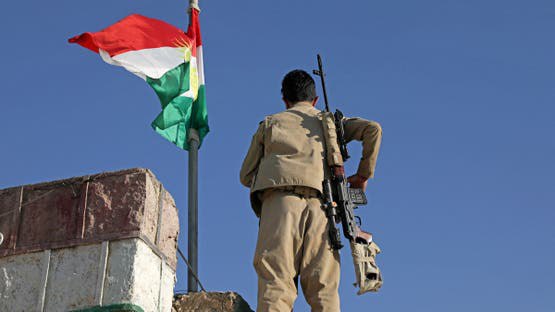
Many Iranian Kurdish fighters have been stationed for years in the Kurdistan region of Iraq, where camps and back bases for factions opposed to Tehran are spread, which have repeatedly been subjected to Iranian airstrikes over the past years.
In a notable development, U.S. President Donald Trump stated that he supports Iranian Kurdish fighters launching an attack on Iran, but he refrained from clarifying whether the United States would provide air cover or direct military support to them.
A Kurdish Alliance Monitors the War
Five Iranian Kurdish opposition groups announced the formation of a political and military alliance aimed at overthrowing the power in Tehran and opening the way for the Kurds to determine their fate.
Spokesman for the "Kurdistan Freedom Party" Khalil Kani Sanani stated that the continuation of American and Israeli strikes against Iran will weaken the regime's forces and create conditions for an uprising within Iranian Kurdistan.
He added that the Kurdish factions "have completed their preparations and are closely monitoring the developments of the war," indicating that the continuation of the current situation could lead to an outbreak of a Kurdish uprising within Iran.
Iran Accuses Factions of Terrorism
For its part, Tehran accuses these organizations, many of which adopt a leftist orientation, of carrying out attacks within its territory and working for Israel and Western countries, classifying them as terrorist groups.
In recent days, Iran has launched missile and air strikes on sites of these factions in northern Iraq, in an attempt to prevent any potential military movement across the border.
Iranian officials have also warned Baghdad of the possibility of hundreds of Kurdish fighters infiltrating into Iran, although opposition sources confirmed that no crossing operations have been carried out so far.
The Model of Iraqi Kurdistan
Iranian Kurds aspire to replicate the model of autonomy in the Kurdistan region of Iraq, which was established after the Gulf War in 1991 when the United States and its allies imposed a no-fly zone to protect the Kurds from Saddam Hussein's regime.
Middle East researcher Adel Bekwan states that Iranian Kurds adopt a pragmatic approach and believe that Iran's future may be determined outside its borders, especially in Washington and Tel Aviv.
Complex Alliances in the Region
Despite their hopes for American support, Kurdish trust in Washington remains limited due to past experiences, especially after the reduction of American support for some Kurdish factions in Syria.
At the same time, Baghdad is trying to maintain its security agreement with Iran to prevent the use of Iraqi territory to launch attacks against it, while the Kurdistan Regional Government denied any role in arming or sending fighters into Iran.
As regional tensions escalate, the Kurdish card appears to be one of the most sensitive issues, as any large military movement could change the balance of power within Iran and the entire region.


