Humans or Artificial Intelligence: Who Holds True Creativity?
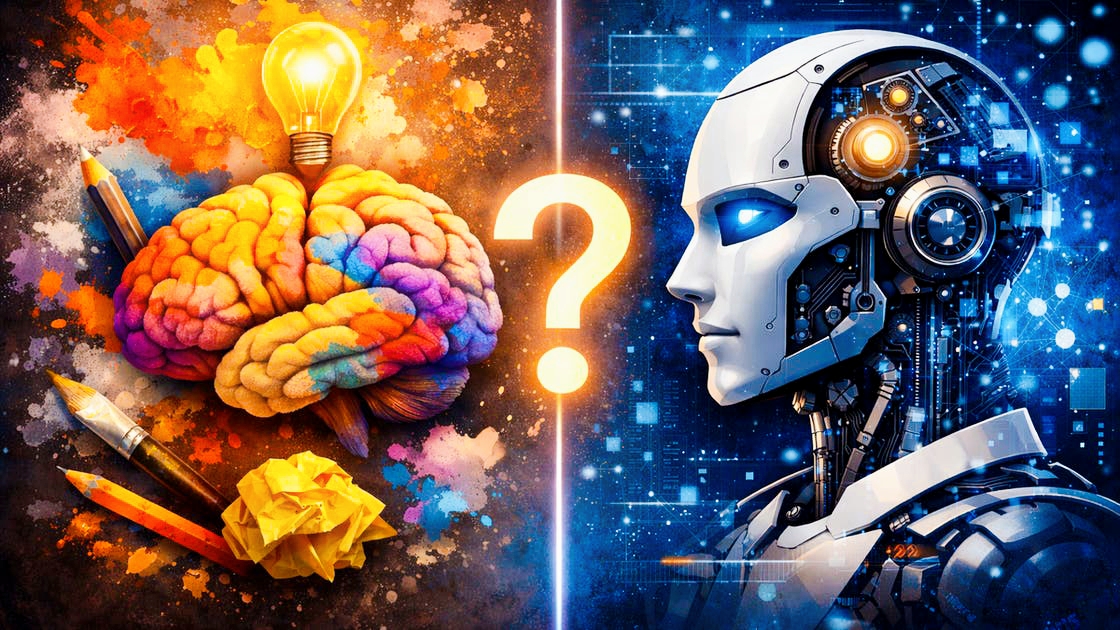
In the largest study of its kind ever, researchers at the University of Montreal in Canada compared human creativity with the latest generative artificial intelligence models to assess the creative ability of each.
The study included over 100,000 human participants, in addition to evaluating the performance of models such as ChatGPT, Claude, and Gemini.
To measure creativity in a scientific and objective manner, the team used the Divergent Association Task (DAT), a psychological tool that requires a person to generate 10 words in 4 minutes that are less related to each other; the less the association, the more creative the performance is considered.
The same task was assigned to the AI models.
The results showed that large language models outperformed the majority of humans in this task, but did not surpass everyone; about half of the human participants outperformed the AI, and the performance of the top 10% of humans was notably distinguished.
Professor Karim Jerbi from the psychology department at the university noted that this study "pushes us to rethink what we mean by creativity, and that artificial intelligence can be a supportive tool for humans in their creative endeavors, not a direct competitor to them."
The researchers emphasized that despite the study's size, it remains limited by the criteria and measurements used, especially since human creativity is difficult to measure compared to computational models, but its results open new horizons for collaboration between humans and machines in creative fields.