Why You Shouldn't Use Tomato Paste After Mold Removal?
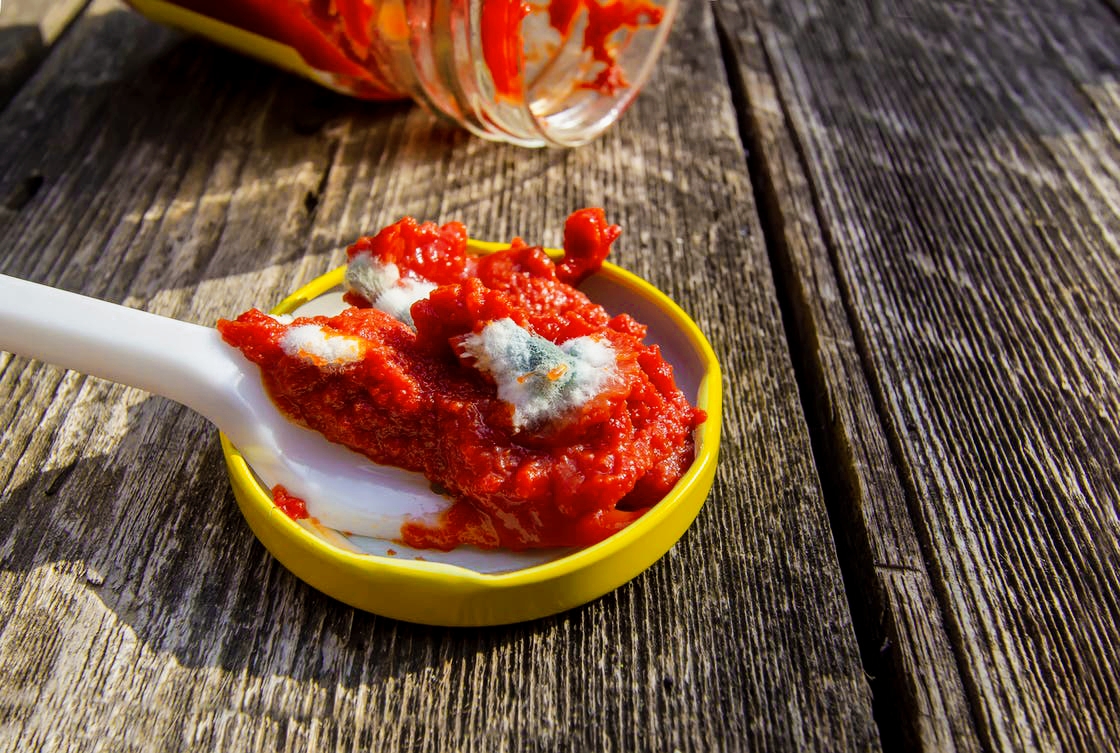
How many of us have used a jar of preserved food despite mold appearing on its surface?
Many people remove the layer of mold from tomato paste or jams, then use what remains, believing the food is safe.
* Mold May Be More Dangerous Than It Looks
Experts warn about the dangers of this issue and advise throwing the entire jar away.
Even if the mold is only visible on the surface, its roots may extend inside the food, and bacteria can grow with it.
* Mycotoxins: The Hidden Poison
Mold can produce toxic chemicals called mycotoxins, which may cause illness and even death, depending on the amount of food consumed, duration of exposure, the individual's age, and health condition.
* Symptoms of Poisoning
Symptoms of acute gastrointestinal poisoning include vomiting and diarrhea, as well as acute liver diseases.
Long-term exposure to low levels of mycotoxins may weaken the immune system.
* The Invisible Danger
Mold growth is often visible, but the mycotoxins themselves are invisible to the human eye and may seep into the food even if it looks clean.
* Foods Most at Risk
Soft foods include:
• Soft fruits
• Jams and tomato paste
• Soft cheese
• Bread and peanut butter
• Yogurt and cream
* Exception for Hard Foods
Hard foods, such as hard cheese, can sometimes have the moldy part cut off and the rest kept, according to Healthline.
* The Final Solution for Completely Moldy Food
If the food is completely covered in mold, it should be discarded entirely to ensure safety.
* Conclusion:
Mold is not just an annoying appearance; it carries real health risks that can threaten your life.
Always make sure to inspect food carefully and avoid the risk of using any product that shows signs of mold, even if the surface layer has been removed.
Remember: Health comes first, and moldy food is not worth the risk.