Tunisia: Court considers appeal of death sentence against citizen over posts on "Facebook"
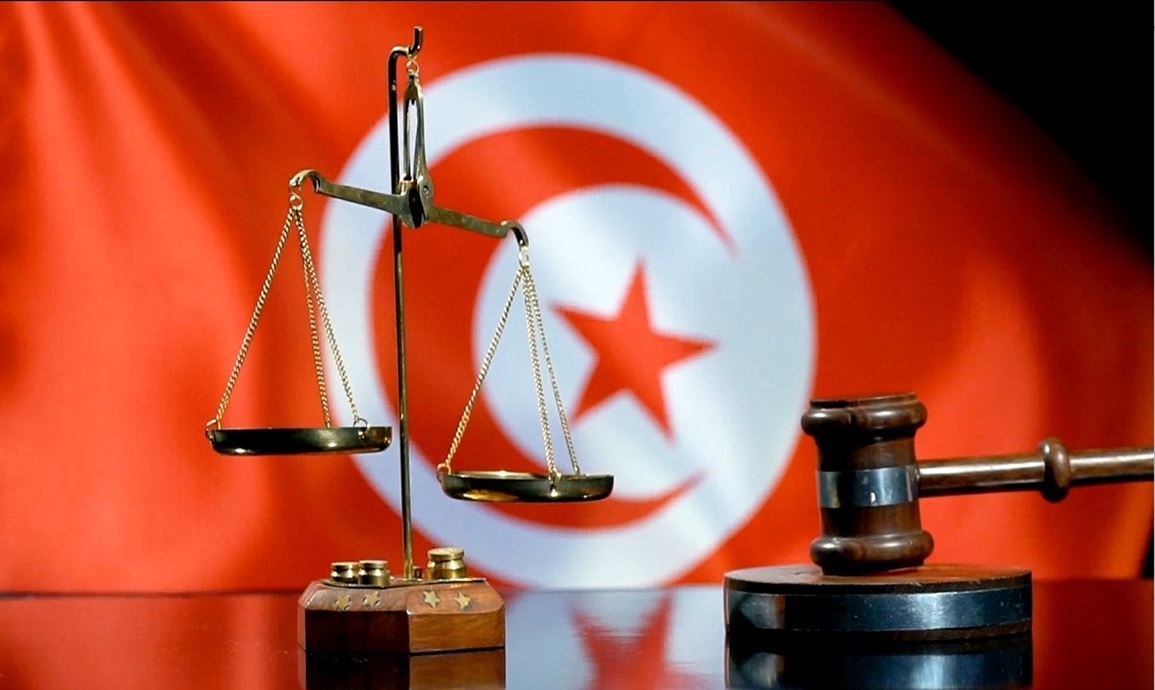
The judicial circuits in the Court of Appeal in Nabeul, Tunisia, are preparing to hold a second session to consider the appeal of the death sentence issued against citizen Saber Chouchane, in a case that sparked extensive legal and human rights debate over posts on "Facebook".
Last week, the Nabeul Court of First Instance sentenced Chouchane to death after convicting him of charges related to "attacking the President of the Republic and state security", where the public prosecution charged him with "spreading false news targeting a public official, committing an offensive act against the President of the Republic, and attempting to change the state’s structure" due to posts in which he criticized President Kais Saied.
In this context, lawyer Leila Haddad, who defends Chouchane, revealed the ongoing steps to appeal the ruling. She stated in an exclusive statement to media today, Monday: "She has initiated procedures regarding the death sentence issued by the criminal circuit of the Nabeul Court of First Instance last Wednesday against Chouchane due to posts in which he criticized Tunisian President Kais Saied".
Haddad added in her statement: "She expects a trial session for her client to be scheduled in which the death sentence, which she described as "unprecedented and unjust", will be overturned".
For his part, lawyer Osama Bouthelja, who is also part of the defense team for the accused, clarified the legal grounds on which the ruling was based, pointing out that Chouchane "was tried under Article 72, Decree 54, and Article 67", affirming that "the court chose to apply the harshest penalty, which is death".
The death sentence is viewed as exceptional in cases of opinion, as Article 72 of Tunisian law states that "whoever commits an attack aimed at changing the structure of the state, or inciting the population to attack each other with weapons and causing chaos, murder, and looting on Tunisian soil shall be punished by death". In contrast, Decree No. 54 stipulates "5 years in prison and a financial fine for anyone convicted of spreading 'rumors or misleading information'", with the penalty doubling "if it involves publishing insults against a public official".
The ruling against Chouchane has sparked a wave of criticism in legal, human rights, and media circles, which viewed it as "disproportionate to the nature of the charges against him, and constitutes a dangerous precedent threatening freedom of opinion and expression in Tunisia".
Lawyers and politicians have also argued that the accused "does not pose any threat to the state, nor does he have any media or political influence", considering "his limited educational background and the small number of his followers on social media", deeming the case as "reflecting an escalation in the use of Decree 54 to pursue critics".