The World is Getting Brighter at Night: How Has the Map of Human Activity Changed?
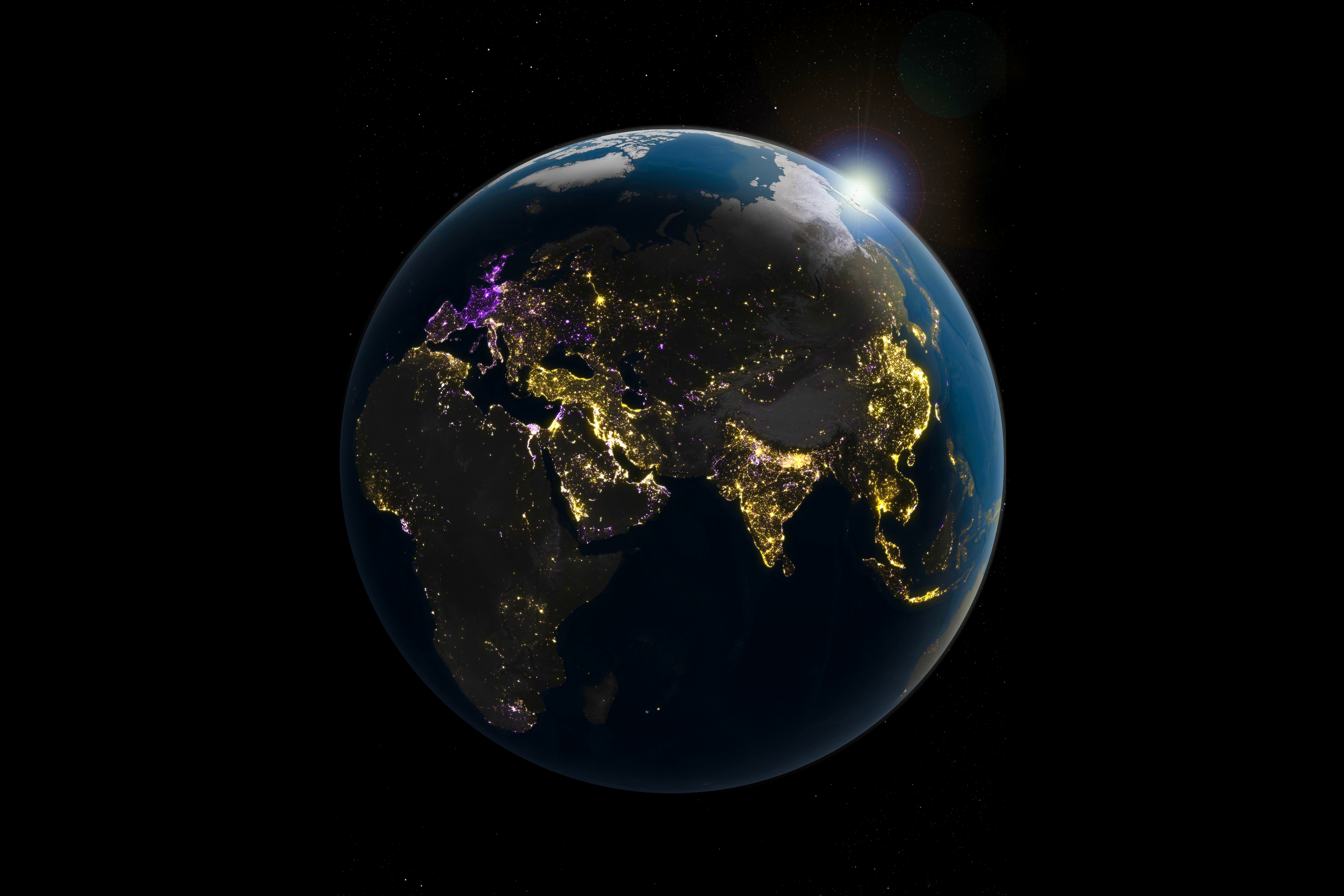
Global Nighttime Lighting Increased by 16% Between 2014 and 2022
A recent study based on high-resolution satellite data revealed that the world has become brighter at night in recent years.
Data from the VIIRS Day/Night Band showed that global nighttime lighting increased at an average rate of nearly 2% per year between 2014 and 2022, amounting to a total increase of approximately 16%, according to a report by "Science Daily".
Variation in Nighttime Lighting Growth Across Regions
Researcher Christopher Kyba explained that this growth in lighting has not been balanced, with light emissions rising by 34% in areas that experienced increases, while decreasing by 18% in other regions.
This disparity reflects differences in human activity patterns and local policies among countries.
Urban Expansion in China and India Boosts Nighttime Lighting
The study's results indicated that changes in nighttime lighting have become more dynamic and localized compared to previous estimates.
Countries like China and India have seen significant increases in lighting due to rapid urban expansion and accelerated economic growth.
LED Technologies and Energy Policies Reduce Lighting in Some Industrial Countries
Conversely, some industrial countries recorded a decline in nighttime lighting levels, partly attributed to the adoption of modern lighting technologies such as LEDs, along with the implementation of policies aimed at reducing light pollution and conserving energy.
Impact of Political Events on Nighttime Lighting in Ukraine
The study also showed that political events directly affect nighttime lighting, with Ukraine experiencing a sharp decline in lighting following the Russian invasion.
France also recorded a 33% decrease due to energy-saving measures, such as turning off streetlights after midnight.
Slight Decline in Nighttime Lighting Across Europe
At the European continent level, light emissions decreased by about 4%, despite remaining nearly stable in Germany, due to variations in trends within the country itself.
High-Resolution Satellite Data Tracks Daily Changes
The study relied on high-resolution daily data, allowing for more accurate tracking of short-term changes compared to previous studies.
Researchers also used advanced algorithms that take into account the satellite viewing angle, contributing to improved measurement accuracy.
The Role of NASA and NOAA in Analyzing Global Nighttime Lighting
The findings were based on satellite data from both NASA and NOAA, which captured nighttime images covering most of the Earth's surface, providing a comprehensive view of lighting changes on a global scale.
The Importance of Studying Nighttime Lighting and Its Impact on the Environment and Energy
This study highlights the importance of understanding changes in nighttime lighting in the context of energy consumption and the effects of light pollution on the environment.
It also calls for the development of more advanced satellites to monitor this phenomenon more accurately in the future.