The Return of Whole Milk to Schools Reignites Debate Over American Food Policy
January 16, 2026303 ViewsRead Time: 2 minutes
Font Size:
16
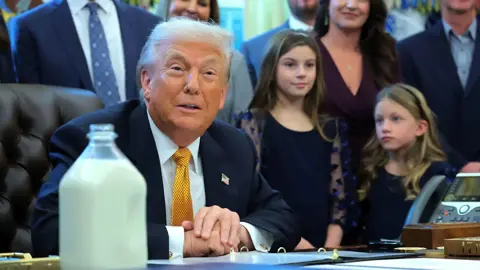
On Wednesday, U.S. President Donald Trump signed a law allowing the return of whole milk to school meals, ending dietary restrictions imposed since 2012 during former President Barack Obama's administration, which limited the offering of higher-fat milk options in American schools.
Wider Options for Students
According to the British newspaper The Guardian, the law, which was passed by Congress last fall, does not only apply to organic whole milk but also includes flavored and unflavored milk, 2% and 1% milk, lactose-free milk, as well as non-dairy alternatives like fortified soy milk, provided they meet established nutritional standards.
The law also requires schools to provide non-dairy alternatives for students whose parents submit medical or personal notes regarding their dietary restrictions.
Trump: A Bipartisan Decision
Trump described the move as “great for everyone,” emphasizing that it does not discriminate between Democrats and Republicans. In contrast, agricultural sector officials viewed the decision as a victory for the American dairy industry, which has long pushed to expand milk options offered in schools.
Political and Economic Dimensions
Analysts believe that the decision goes beyond the issue of milk choice, reflecting a deeper struggle with the food policy established by the Obama administration, and highlights the ongoing tension between public health considerations and economic interests, particularly in the agricultural sector.
From Fighting Obesity to Freedom of Choice
The Obama administration had pushed for the “Healthy, Hunger-Free Kids Act” aimed at reducing saturated fat consumption among children as part of its efforts to combat obesity. The new law shifts the focus towards expanding food choice freedom, taking into account the demands of the dairy sector.
Renewed Scientific Debate
Recent studies indicate that saturated fats in milk are not necessarily linked to direct health harms, and some research suggests that children consuming whole milk may be less prone to obesity compared to their peers who drink low-fat milk, adding a new scientific dimension to the discussion.
Ongoing Nutritional Concerns
Conversely, nutrition experts warn that reintroducing whole milk to schools may increase calorie intake among students, reopening the debate about the role of governments in guiding dietary behavior and the extent to which economic interests influence school nutrition programs.
An Open File
Observers see Trump’s move as a political and nutritional shift simultaneously, bringing the issue of American food policy back to the forefront, amidst a complex equation that combines protecting children's health, supporting domestic industry, and achieving clear domestic political goals.
