Killing of 5 Senior Leaders of the Iranian Quds Force in an Israeli Airstrike in Beirut
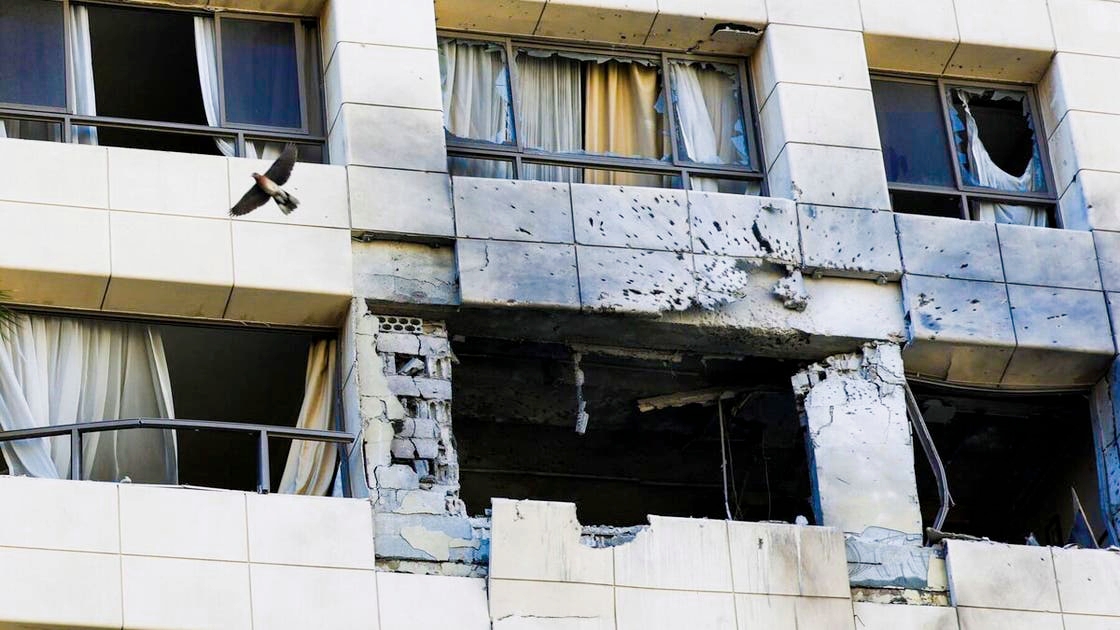
In a significant development amid the escalating tensions in Lebanon, Israel revealed details of a military operation it described as "precise," targeting a meeting of senior leaders in the Quds Force of the Iranian Revolutionary Guard inside the Ramada Hotel in the Raouche area of the capital Beirut, resulting in the deaths of several prominent leaders.
* Airstrike Targeting a Secret Meeting
Early yesterday morning, a powerful explosion shook Beirut's waterfront after an Israeli airstrike targeted rooms inside the Ramada Hotel, where a meeting of leaders associated with the Quds Force was taking place.
The Lebanese Ministry of Health confirmed that the attack resulted in the deaths of four individuals and injured ten others, before Israel later announced that the strike had killed five prominent leaders.
According to the Israeli army spokesperson, the operation was carried out with precise intelligence guidance from the military intelligence division and targeted leaders from the "Lebanon Brigade" and "Palestine Brigade" affiliated with the Quds Force.
* Notable Casualties in the Airstrike
According to the Israeli narrative and media sources, the casualties are:
• Majid Hosseini: Responsible for transferring funds to Iranian arms in Lebanon, overseeing the financing of Hezbollah activities and allied organizations, in addition to supporting the production of weaponry.
• Ali Reza Baazaar: Intelligence branch leader in the "Lebanon Brigade," considered one of the leading experts in gathering intelligence for Hezbollah.
• Ahmad Rasouli: Intelligence officer in the "Palestine Brigade," responsible for gathering information for Palestinian organizations in Lebanon and the Gaza Strip.
• Hossein Ahmadlu: Intelligence operative tasked with monitoring Israel and gathering information about it.
• Abu Mohammad Ali: Hezbollah representative to the "Palestine Brigade" and responsible for ongoing coordination between the two parties.
* Background of the Escalation
Lebanese security sources revealed that Iranian liaison officers were coordinating with Hezbollah on its military operations in the ongoing confrontation with Israel, which erupted after the party launched a barrage of rockets towards Israel "in retaliation" for the assassination of Iranian leader Ali Khamenei, according to what was reported in those sources.
* Casualties on Both Sides
In conjunction with these developments, the Israeli army announced for the first time since the start of the confrontation last week the deaths of two soldiers from its forces in battles in southern Lebanon.
It clarified that one of them is Sergeant Maher Khattar (38 years old), a soldier in the combat engineering corps of the 91st division, while the name of the second soldier was not disclosed.
On the other hand, the Lebanese Ministry of Health announced that the number of deaths due to Israeli airstrikes since the escalation began last Monday has risen to 394 fatalities.
* Evacuation of Iranians from Lebanon
On another note, more than 117 Iranians left Lebanon, including diplomats and staff from the Iranian embassy, on a Russian plane that took off from Beirut early Sunday, according to a Lebanese official.
The plane also transported the remains of an Iranian diplomat and his wife and three children who were killed during the war.
Although Beirut International Airport continues to operate, most international airlines have suspended flights to and from Lebanon, while Middle East Airlines continues to operate the majority of flights.
* Lebanese Measures Against the Revolutionary Guard
Politically, the Lebanese government took a notable step this week by approving a ban on any activities of the Iranian Revolutionary Guard within the country, as well as imposing a requirement for Iranian citizens to obtain a visa prior to entering Lebanon, amid rising tensions between Israel and Hezbollah backed by Tehran.
This development comes at a time when the pace of strikes and military operations is accelerating, raising increasing fears of an expansion of the confrontation in the region.
