The Disappearance of the "Lung of Khartoum": What Happened to the Historic Acacia Forest?
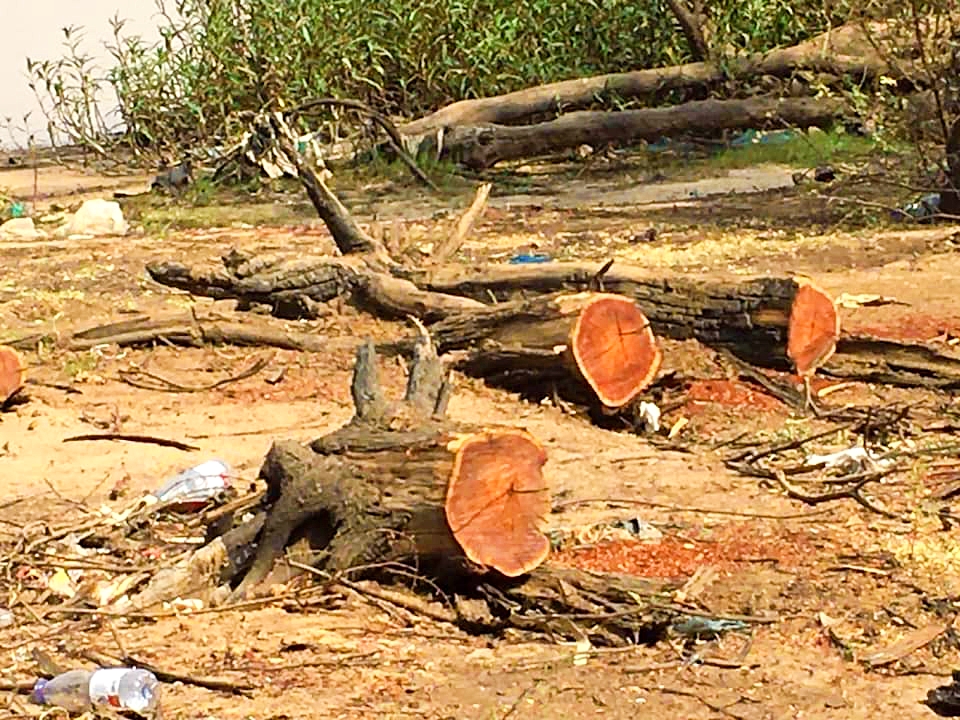
The Acacia forest, known as the "Lung of Khartoum", has transformed from an ancient nature reserve into a shocking scene of barren land, after being completely destroyed due to rampant tree cutting since the outbreak of war in Sudan in mid-April 2023.
A Sudanese photographer documented the scenes of the devastated forest, which quickly spread on social media, revealing the massive destruction that has befallen this unique natural area, which covered approximately 1500 hectares on the eastern bank of the White Nile, at the confluence of the Blue and White Nile, in a geographically and environmentally rare location.
* A Historic Forest and an Integrated Ecosystem
The forest was officially established as a nature reserve in 1939, gaining fame from its flood-resistant acacia trees and harsh climatic conditions, and it formed a habitat for integrated ecosystems.
Additionally, the Acacia forest was one of the globally classified wetlands, submerged in water for about 6 months each year without losing its ecological balance, which qualified it for classification as a site of global value according to UNESCO standards.
* A Refuge for Birds and Wildlife
The forest was not just a green space; it was a safe haven for migratory birds from Europe, Asia, and Africa, serving as a natural transit station, and it hosted dozens of species of local and rare birds, along with reptiles, insects, and small wild animals, making it a complete ecosystem for over a century.
* A Living Scientific Institution
In 1946, a School of Forestry Experts was established within the forest, which graduated the first generation of Sudanese forestry technicians and contributed to national afforestation projects.
Thus, the forest was not just a natural outlet for the capital, but a living scientific institution, contributing to environmental protection and monitoring animal migrations.
* An Environmental Catastrophe Threatening Khartoum
Today, after this widespread destruction, Khartoum has lost its natural "lung".
Forestry experts warned that tree cutting on this scale will accelerate desertification, soil degradation, air and water pollution, disruption of the rainfall cycle, and exacerbate climate change, confirming that the ecosystem that lasted for decades has completely collapsed.
The scenes of the shattered forest on social media are shocking and raise questions about the future of the urban environment in Khartoum and the city's ability to withstand the effects of desertification and pollution without this green lung that had protected it for decades.