Succession of Khamenei: Who is Mojtaba, the new Supreme Leader of Iran?
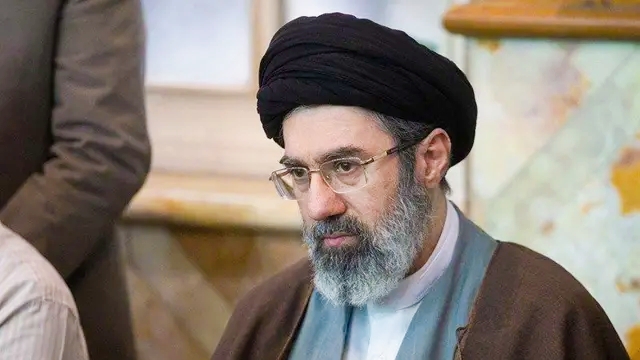
In a surprising move that sparked widespread controversy, the Iranian Assembly of Experts announced on Sunday evening, March 8, 2026, the election of Mojtaba Hosseini Khamenei, the second son of the late Supreme Leader Ali Khamenei, as the new Supreme Leader of the Islamic Republic.
The decision came after the assassination of his father in the U.S.-Israeli attack on Tehran on February 28, amid calls to maintain national unity and avoid a leadership vacuum.
* A Mysterious Figure within the Power Structure
Mojtaba Khamenei is considered one of the most enigmatic figures within the Iranian system.
Unlike his father, he has not held any government position and has rarely appeared in the media, with few photos and videos published.
Nevertheless, there have been ongoing speculations about his influence within the system, as he is seen as one of the main channels of communication with his father.
* A Controversial Succession
This move raises significant controversy, as the ideology of the Islamic Republic relies on selecting the Supreme Leader based on religious status and leadership ability, rather than family inheritance.
However, U.S. diplomatic cables described Mojtaba as "the hidden power behind the religious cloak," and he is viewed within the system as a competent and decisive leader, according to the Associated Press.
* Background of Mojtaba Khamenei
Mojtaba was born on September 8, 1969, in the city of Mashhad in northeastern Iran, and he is the second of six children of the Supreme Leader.
He grew up in a religious and political environment following the establishment of the Islamic Republic in 1979.
He belongs to a prominent religious family, being the brother of Mostafa Khamenei and a relative of Hadi Khamenei.
He is married to Zahra Hadad, the daughter of conservative politician Gholam Ali Haddad Adel.
He received his secondary education at the Alavi Religious School in Tehran and moved to Qom in 1999 to continue his religious studies at the seminary, where he first wore the clerical robe at the age of thirty, which is relatively late compared to traditional seminary students.
He studied jurisprudence and traditional religious sciences, but did not stand out as a prominent religious authority, and is usually classified among clerics of moderate rank.
* Official Support and International Rejection
The Iranian Revolutionary Guard announced its allegiance to the new Supreme Leader, affirming its forces' readiness to follow his orders.
Iranian President Masoud Bezhakian expressed that Mojtaba's selection reflects the people's will to enhance national unity, while the Secretary of the Supreme National Security Council Ali Larijani described the new leader as capable of leading Iran in the current sensitive circumstances.
On the other hand, U.S. President Donald Trump expressed his rejection of Mojtaba's selection, stating that he "will not last long" without U.S. approval, adding that his country seeks to ensure that a leadership vacuum does not recur in the region.

