Kaja Kallas Announces New Sanctions on Iran with EU's Commitment to Dialogue
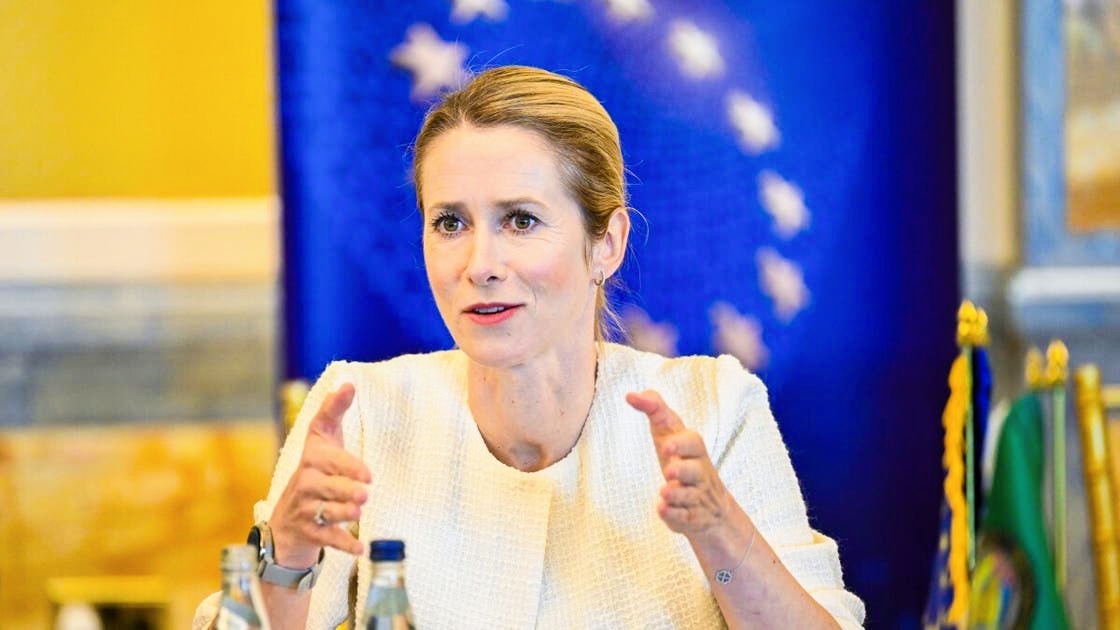
In a pivotal move regarding European policy towards Iran, Kaja Kallas, the EU's foreign policy chief, revealed the union's intention to list the Iranian Revolutionary Guard as a terrorist organization, hinting at additional sanctions on Tehran.
This step comes at a time when popular protests are escalating in Iran, with the regime facing accusations of committing acts of violence against demonstrators.
In statements made before the EU foreign ministers' meeting today in Brussels, Kallas anticipated new sanctions on Iran, including travel bans and asset freezes on Iranian officials believed to be involved in the killing of between 3,000 and 10,000 protesters since late December.
This is part of the EU's response to the violent crackdown on protesters, who have taken to the streets against the Islamic Republic's regime due to the deteriorating political and economic situation in the country.
Despite the anticipated sanctions, Kallas clarified that the European Union prefers to keep diplomatic channels with Tehran open, reflecting a cautious approach in dealing with the Iranian file, as Brussels sees dialogue as a potentially necessary tool despite rising tensions.
The EU is expected to take a symbolic step by listing the Iranian Revolutionary Guard among terrorist organizations, a body already under EU sanctions for its repeated human rights violations.
While this classification is largely symbolic, it carries political significance amid pressures from several European capitals, notably Berlin and Paris, which have supported this move, potentially paving the way for consensus among the 27 EU member states.
In a related context, EU foreign ministers will receive a briefing from their Ukrainian counterpart Andrii Sybiha on the latest developments in the war in Ukraine before discussing the possibility of imposing additional sanctions on Russia.
They will also address the humanitarian situation in Gaza and Syria, in addition to security challenges in the Democratic Republic of the Congo.
These developments come amid complex discussions regarding the evolving situations in the Middle East and Eastern Europe, as demands increase for greater pressure on Iran, which is considered one of the key players in regional political and military conflicts.
* Other topics to be discussed at the summit include:
• Developments in Ukraine and ways to enhance security support for Ukraine in the face of ongoing Russian attacks on infrastructure.
• The peace plan in Gaza and possible ways to achieve stability after recent waves of violence.
• The crisis in Syria and ways to address the recent escalation in the northeast of the country.
• The humanitarian situation in the Democratic Republic of the Congo.
All eyes remain focused on how discussions within the European Union will unfold and whether the new pressures on Iran will lead to a broader diplomatic process or further exacerbate the existing situation.