Iranian Universities Test the Balance of Power and Protest as the New Semester Begins
February 25, 202649 ViewsRead Time: 2 minutes
Font Size:
16
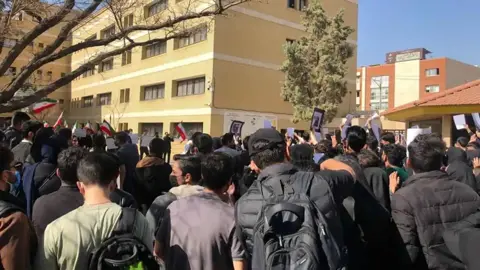
As the academic semester begins in Iran, major universities have returned to the forefront of the political scene, as their campuses have transformed into hotspots of renewed student protests, amid escalating tensions between students and authorities, according to Iran International.
From Remote Learning to the Return of Confrontation
Authorities resorted to shifting education to an online system last January, following a wave of protests linked to economic conditions, in a move seen by students as an attempt to contain mobilization within the campus. However, the resumption of in-person classes has reignited momentum for field movements, especially at universities in Tehran, Mashhad, and Isfahan.
Memorial Ceremonies Turn into Political Messages
At Tehran University, students organized a memorial for a graduate student, chanting slogans including “Women, Life, Freedom,” while the Basij Student Organization attempted to steer the event towards a pro-government narrative. At Sharif University of Technology, a silent protest turned into an open debate after Quranic recitations were broadcast over loudspeakers, which protesters viewed as an attempt to disrupt.
Symbolic Division and Contrasting Slogans
Circulating clips showed opposing chants between pro-government students declaring their loyalty to Supreme Leader Ali Khamenei, and others chanting slogans criticizing the Islamic Republic and the Revolutionary Guard. Diverse symbols emerged; loyalists burned flags of the United States and Israel, while opponents raised the “Lion and Sun” flag from before the 1979 revolution, and some students burned the Islamic Republic flag.
Some chants referenced Reza Pahlavi, indicating the presence of a royal dimension in the protest discourse.
Legal and Security Dilemma
The unrest places Iranian leadership in a delicate equation: strict security intervention could push protests outside university walls, while leniency may be seen as allowing opposition to expand. The situation is complicated by a law enacted in 2000 that prohibits military and security forces from entering campuses without official permission, following the events of 1999.
Nevertheless, human rights reports have indicated repeated security interventions, including documenting and photographing participants, along with university warnings of potential disciplinary actions, signaling ongoing tension between the academic institution and political authority.

