Europe Under Pressure from "Digital Terrorism": How ISIS Uses Artificial Intelligence for Recruitment and Planning
February 25, 202638 ViewsRead Time: 2 minutes
Font Size:
16
Recent reports indicate that the ISIS organization has systematically adopted artificial intelligence, moving beyond traditional propaganda to use it as a tool for recruitment, planning, and remote operations management. This development poses a dual threat to European countries: a digital risk online and the movement of organization members in detention camps in Syria.
From Propaganda Magazine to AI Evidence
Politico revealed that recent issues of the "Voice of Khorasan" magazine, affiliated with the ISIS Khorasan branch, included detailed instructions on using AI chatbots, along with warnings about privacy and not uploading sensitive files.
According to PBS News and the Associated Press, the organization's supporters encouraged the use of these tools to expand recruitment and propaganda, while a report from the Soufan Center (December 2025) indicated that "ISIS Khorasan" is at the forefront of digital experiments to enhance media outreach.
The British GNET Institute also documented the launch of a virtual news program using AI that mimics real broadcasters to lend formal credibility to propaganda messages.
Al-Hol Camp: A Renewed Security Concern
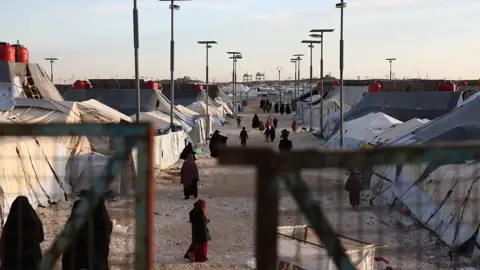
Digital fears intersect with the ground reality in the Al-Hol camp in Al-Hasakah province, where Reuters reported the escape of between 15,000 and 20,000 detainees during a wave of chaos, according to an internal European memo.
Human Rights Watch confirmed that this security vacuum allowed suspected organization members to escape, raising risks of human trafficking and re-recruitment, especially after the Syrian government took control of the camp in early 2026, amid a European assessment indicating limited capacity for Damascus to manage these facilities.
A Dual Challenge for European Security
Security experts agree that the threat manifests in:
The digital aspect: rapidly translated propaganda and online recruitment.
The field aspect: exploiting the fragility of camps and the economic and humanitarian conditions of detainees.
This scenario compels Europe to strengthen security strategies, monitor digital developments, and reconsider camp management and international cooperation, making the struggle against terrorism not only on the ground but also within the realm of algorithms and technology.

