Egypt Imposes New Restrictions on Children's Use of Social Media Platforms
In what is considered the broadest move of its kind, the Egyptian government has initiated a comprehensive legislative and regulatory action to recalibrate the relationship between children and the digital world, as part of a national plan aimed at protecting young age groups from the risks of the internet and social media platforms, under direct presidential sponsorship.
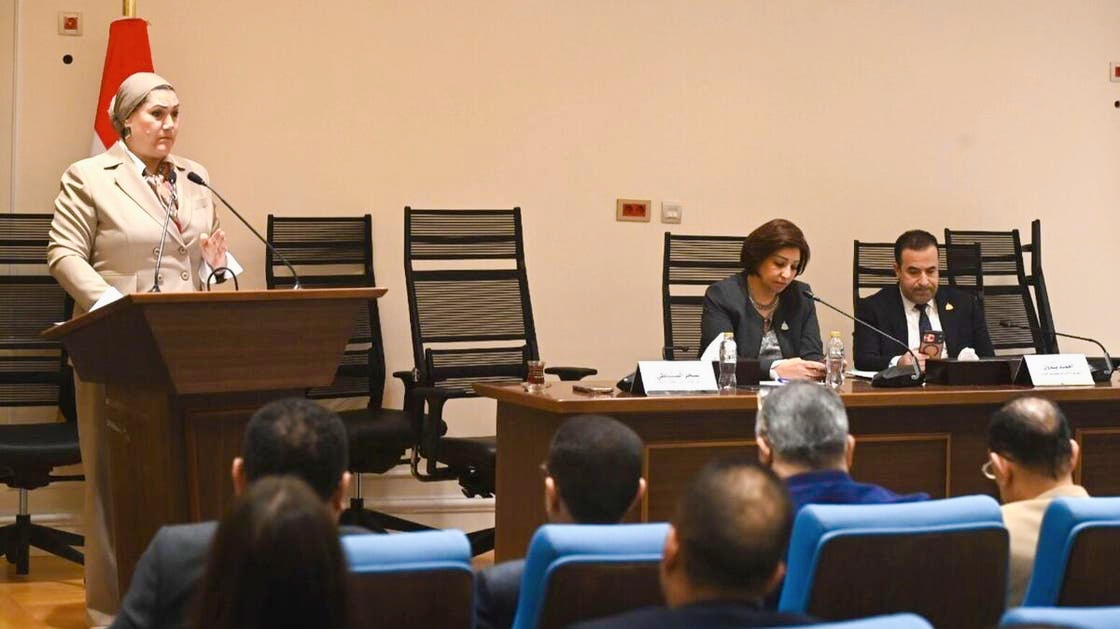
During a hearing held by the House of Representatives, Minister of Communications and Information Technology Dr. Amr Talaat, and Chairwoman of the National Council for Childhood and Motherhood Dr. Sahar El-Sunbati, revealed the outlines of a new draft law aimed at imposing strict regulations on children's use of digital platforms, and ending what official bodies described as "digital chaos" that threatens the safety of the youth.
* Five-Pillar Strategy
The Minister of Communications announced a comprehensive national strategy based on five main pillars to confront the threats faced by children in cyberspace, emphasizing that the state will not allow the continuation of what he called "closed social circles" that exploit children emotionally and psychologically through digital content.
* Warning Against "False Negative Role Models"
The minister warned of the dangers of what he termed "false negative role models," which promote deviant behaviors through social media platforms, pointing out that some platforms have turned into digital entrapment environments through dangerous challenges that drive children to harm themselves, in addition to digital addiction and excessive spending within video games.
* Technical Mechanisms and Immediate Blocking
The government plan includes imposing technical mechanisms to verify users' ages before allowing access to classified dangerous sites and games, along with immediate blocking of digital games that create harmful social environments or incite violence.
It also includes requiring international platforms to activate virtual safety settings for children, and preventing algorithms that push them towards extremist or harmful content, while integrating digital safety concepts into school curricula in collaboration with the Ministry of Education.
* Complete Ban for Under 16s
For her part, the Chairwoman of the National Council for Childhood and Motherhood presented a vision inspired by the Australian experience, which calls for a complete ban on the use of social media for children under the age of 16.
The council also recommended establishing urgent judicial circuits specialized in the immediate removal of offensive content, and legislating what is known as the "right to digital forgetfulness" upon reaching the age of 18, which allows for the deletion of harmful content associated with childhood.
* Monitoring Communications and Artificial Intelligence
The recommendations included requiring telecommunications companies to offer family packages that filter harmful content at the source, along with imposing deterrent penalties for using artificial intelligence technologies to produce or promote exploitative materials for children.
It also called for the establishment of a national committee for children's digital rights to monitor platforms' compliance with the new rules and issue periodic evaluation reports.
* Legislation Under Preparation
The House of Representatives recently announced the actual initiation of preparing a draft law to regulate children's use of social media applications and websites, similar to international experiences that have moved to restrict mobile phone use until a certain age.
The council confirmed that this approach comes in light of the growing psychological and behavioral risks resulting from excessive use of modern technology, stressing that the aim of these measures is to protect children and preserve their awareness and psychological and intellectual formation, and not to impose any political or social restrictions.


