Edinburgh Scientists Turn Plastic Waste into Medication for Parkinson's in an Innovative Way
March 30, 2026889 ViewsRead Time: 2 Minutes
Font Size
16
A research team at the University of Edinburgh in Scotland has achieved a scientific breakthrough that combines environmental protection with modern medicine, after developing a method to convert plastic waste into "Levodopa," the gold standard for treating Parkinson's disease symptoms, representing a revolution in utilizing plastic materials and transforming them into useful resources.
From Water Bottles to Parkinson's Medication: How Does the Conversion Happen?
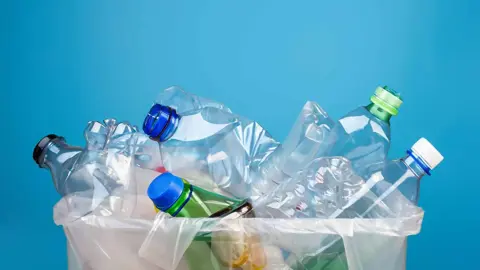
The research team focused on PET plastic used in single-use water bottles and invented two main processes:
1. Decomposition:
The plastic waste is broken down into its basic chemical components, extracting terephthalic acid (TPA).
2. Bioconversion:
Laboratory strains of E. coli bacteria were engineered to consume terephthalic acid and convert the carbon extracted from plastic into the pharmaceutical compound levodopa.
The Importance of This Discovery: Sustainability and Medicine Together
The traditional production of levodopa relies on chemicals derived from oil, while this new technique offers:
Reducing dependence on fossil fuels.
Managing waste through better recycling (Upcycling), where plastic becomes a valuable resource instead of an environmental burden.
Future Prospects: Circular Economy and Drug Production from Waste
Although this technique is still in the proof-of-concept stage in the lab, researcher Stephen Wallace emphasizes the enormous potential, citing the same team's previous conversion of PET plastic into paracetamol.
This innovation reinforces the idea of a circular economy, where waste is used as a carbon source to produce vital medicines instead of being dumped in landfills or oceans.
Global Adoption and Support from Research Institutions
The Engineering and Physical Sciences Research Council (EPSRC) praised the work as a model for how to exploit biological engineering to tackle environmental and health challenges.
Although this method alone will not end the annual plastic waste crisis of 100 million tons, it represents a significant step toward integrating public health with environmental protection.