Amazing Discovery in Rice Turns It into a Smart Material That Changes Engineering Rules
New Scientific Discovery Reveals Unexpected Behavior of Rice
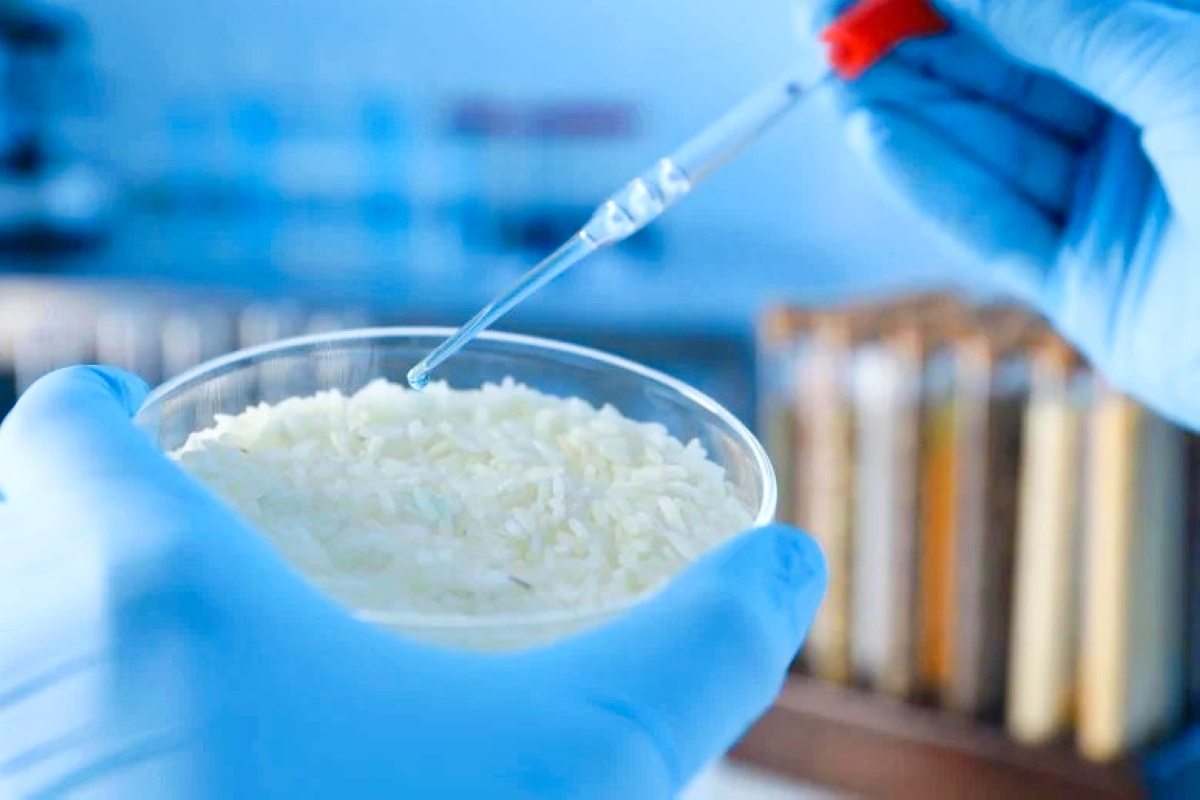
An international team led by the University of Birmingham has discovered a unique property in rice grains, where their mechanical behaviors change unexpectedly under pressure.
When a slow force is applied, rice remains cohesive and strong, while rapid pressure weakens it instead of increasing its stiffness.
"Rate Softening" Phenomenon Explains Rice Weakness Under Rapid Pressure
The researchers explained that this phenomenon is known as "rate softening," which is an uncommon behavior in most materials.
This occurs due to reduced friction between rice grains at high speeds, leading to the breakdown of the internal force networks that give the material its cohesion.
Innovating Super Materials Using Rice and Sand Integration
The scientists relied on this property to develop a new type of "super materials," which are engineered materials designed to exhibit properties not found in nature.
This was achieved by combining rice grains with other materials like sand, which becomes harder when exposed to rapid pressure.
Smart Materials That Adapt to Force Without Electronics or Sensors
This integration resulted in a composite granular material capable of automatically changing its behavior, as it can bend, curve, or harden depending on how the force is applied, whether gradually or suddenly, without the need for electronics or control systems.
Researchers' Statements on Turning a Strange Phenomenon into a Design Principle
Dr. Mingchao Liu from the University of Birmingham stated that rice is known as a global staple food, but it is rarely associated with advanced engineering, emphasizing that this study shows its potential to be used as a basis for developing new functional materials.
He added that the team did not treat the phenomenon as an odd case but transformed it into a design principle, where the laws of physics dictate the material's response: rapid loads generate different behavior than slow loads without technical intervention.
Future Applications in Flexible Robotics and Harsh Environments
The study's results suggest the potential use of these materials in developing lighter and safer flexible robots compared to traditional designs.
They could efficiently work alongside humans, in harsh environments, or in delicate tasks such as assisting in surgical operations.
Promising Uses in Smart Protective Gear
This technology opens the door for developing advanced protective equipment that responds immediately to impact speeds, as it can absorb energy or deform in a controlled manner, helping to reduce injury risks.
How Granular Materials Redefine Smart Systems
This study highlights how simple materials like rice can be transformed into smart systems that respond mechanically without the need for energy or sensors, representing an important step towards designing self-adapting materials in the future.