A Robotic Dog is Changing the Future of Agriculture and Captivating the World
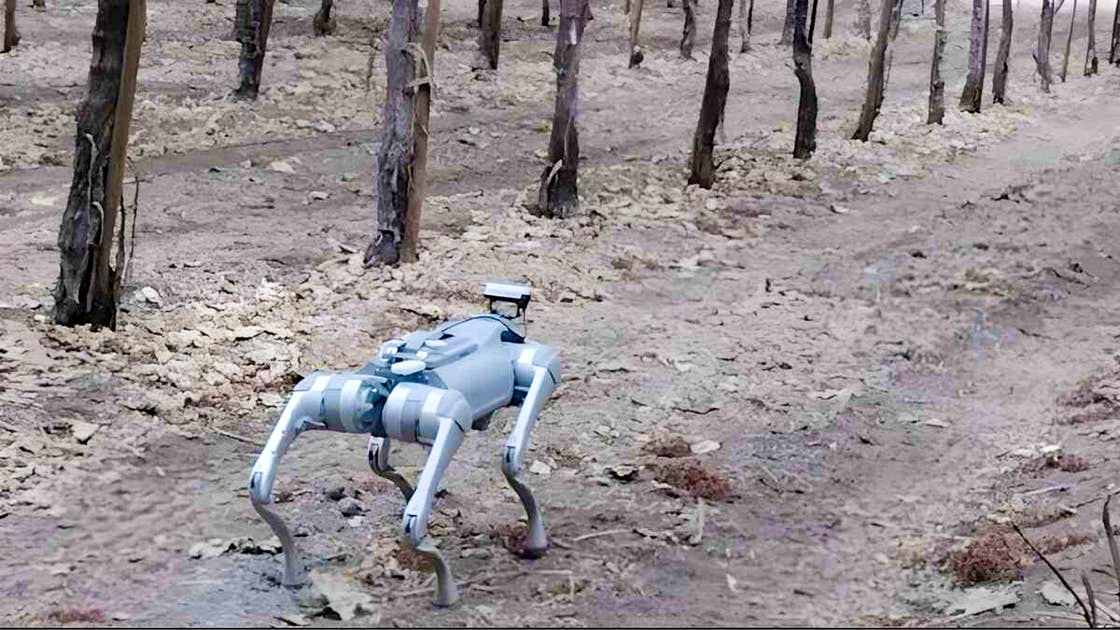
Quadrupedal robots have entered the agricultural world, becoming more than just a science fiction idea, as they begin to roam fruit orchards to inspect leaves and count fruits instead of human agricultural engineers.
In the vineyards of Chile, an innovative robotic dog from FruitAS AI proves to be a true revolution in farming, reducing errors and waste by up to 95% and providing crop monitoring accuracy of up to 90%.
The robot is equipped with advanced artificial intelligence technologies and animal-inspired movement, allowing it to navigate between rows of crops autonomously, monitoring plants that reach about one and a half meters in height, including blueberries and short-growing fruits, without the need for human supervision.
During its rounds, it collects 3D data about each plant, identifies rows that need human intervention, learns growth patterns, and then returns to its charging base on its own.
Farmers can allow it to work independently within designated areas or guide it via a mobile app while monitoring its progress on the screen, which is very similar to tracking smart delivery operations.
Kedar Air, CEO of FruitAS AI, described the robot as “a kind of mountain goat with a brain,” calculating the stability of each step in a fraction of a second, giving it the ability to navigate muddy and uneven terrain where wheeled machines struggle.
The robot's cameras and AI models produce 3D data for each plant, allowing the processing of information from hundreds of trees or shrubs in minutes instead of the hours humans need for manual counting.
In a typical growing season, a human expert may cover only 1% of a large farm, while the robot covers every row and creates a comprehensive and accurate picture.
This comprehensive data translates into reduced nutrient costs, decreased waste, and improved information management, which lowers risks and makes crops more predictable.
In initial trials on table grape vineyards in Chile in September 2025, the robot helped improve fruit size consistency and reduced errors by 95%, providing accurate data on color and size at nearly 90% accuracy.
A report from EcoNews indicates that the global agricultural robot market could exceed $100 billion within eight years, driven by declining numbers of farmers, rising labor costs, government support for automation, and rapid advancements in artificial intelligence.
With this innovation, the agricultural world is moving from limited manual monitoring to precise and comprehensive surveillance, proving that the agricultural future may be in the hands of these intelligent robotic dogs.
