ALMA Telescope Captures Largest Image of the Milky Way's Core
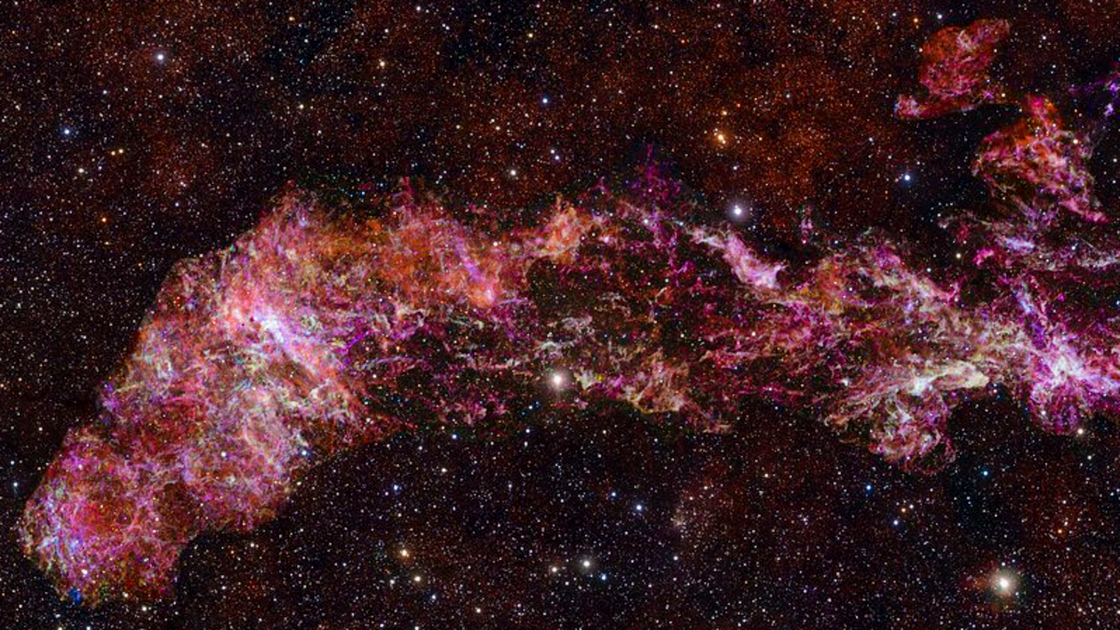
In an unprecedented astronomical achievement, scientists have succeeded in capturing the largest and most detailed image of the center of the Milky Way galaxy, revealing stunning scenes never observed before, using the ALMA telescope located in the Atacama Desert in Chile.
The new image, which is the largest of its kind captured by "ALMA," came as part of a wide scientific project known as the ALMA Survey to Explore the Galactic Center, involving more than 160 scientists who have worked for many years to create an accurate map of our galaxy's core; an area that has long remained mysterious and fragmented in the eyes of researchers.
* Why is this image important?
The principal investigator of the project, astrophysics professor at the University of Liverpool, Stephen Longmore, confirmed that the significance of the image goes beyond being a stunning view of space; it is, according to him, a key to understanding the origins of planet Earth itself.
Longmore explains that the harsh conditions prevailing in the center of the galaxy—from high temperatures, immense pressures, and violent disturbances—are very similar to the conditions that prevailed in the early universe when most of the stars we see today were in the process of formation.
The distant galaxies where those stars formed are difficult to observe in detail due to their vast distance, but the center of our galaxy offers scientists a rare opportunity to closely observe the processes of star and planet formation.
* From scattered spots to a complete map
Before this image, scientists could only see small, scattered snapshots of the galactic center; akin to images of separate streets without a complete city map.
They were observing gas clouds here and areas where stars were forming there, without a clear understanding of how these elements were interconnected.
Now, the new image has revealed an interconnected and complex network of cosmic structures, with the most notable discovery being the detection of long, thin strands of material flowing through space.
These strands—which scientists did not expect to see in this way—represent streams of gas and cosmic dust gathering to fuel the process of star and planet formation.
This discovery provides scientists with deeper insight into the mechanism of "star birth" and offers vital clues about how planetary systems, including our solar system, form.
* The next step: Deeper insight into the universe
The scientific ambition does not stop here; researchers plan to use more advanced tools, such as the James Webb Space Telescope, which allows for ultra-precise observation of the universe in infrared, in addition to the extremely large telescope (ELT) currently under construction in Chile, which will be one of the most powerful optical telescopes in the world.
The goal? To dive deeper into the galactic center, unravel more secrets of star and planet formation, and perhaps take another step closer to answering one of humanity's oldest questions: How did it all begin?
With this historic image, the center of the Milky Way is no longer just a mysterious point in the sky; it has become an open cosmic laboratory, gradually revealing the story of star formation... and our story too.

